

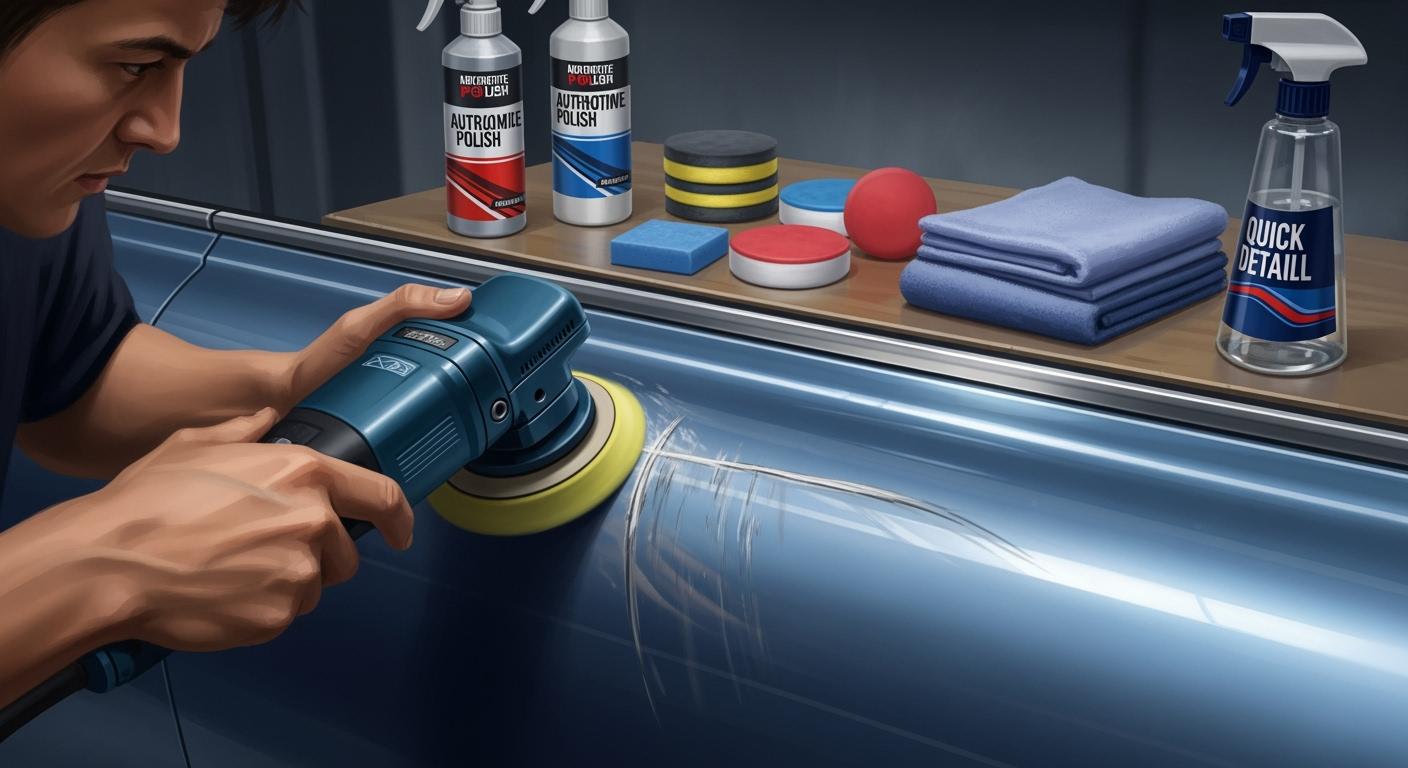
You may feel upset when you see a scratch on your car. Car detailing tools help you fix scratches safely. These tools keep your car looking nice. Many people think detailing is cheap and simple for small damage. Professionals fix bigger problems. Beginners can also get good results.
Key Takeaways
Find out what kind of scratch is on your car. Surface scratches are simple to fix with polish. Deep scratches might need a professional to help.
Use the correct car detailing tools like microfiber towels. Use polishing compounds to safely take away scratches. These tools help keep your car looking nice.
Wash and wax your car often to protect its finish. Good habits stop new scratches. They also help your car look new.
Identify Car Scratch Types
Surface vs. Deep Scratches
You might see a mark on your car and wonder how serious it is. Not all scratches are the same. Some only touch the surface, while others go much deeper. Surface scratches often look light and white. You can usually fix these with a simple polish. Deep scratches, though, can show a dark color or even metal. These need more work and sometimes professional help.
Here’s a quick guide to help you spot the difference:
Type of Scratch |
Characteristics |
Common Causes |
Repair Methods |
|---|---|---|---|
Clear Coat Scratches |
Surface-level marks, light and whitish |
Tree branches, car washes, keys |
Polishing compound, microfiber cloths |
Base Coat Scratches |
Darker appearance, shows color beneath |
Shopping carts, gravel, vandalism |
Touch-up paint, color matching |
Primer Scratches |
Exposes primer layer, light gray or white marks |
Hard impacts, aggressive vandalism |
Primer, base coat, clear coat |
Deep Scratches |
Exposes bare metal, silver or gray visible |
Collision damage, severe vandalism |
Professional repair, rust prevention |
Tip: If you see silver or gray, you probably have a deep scratch. You should act fast to stop rust.
Assessing Scratch Depth
You can check how deep a scratch is with a few simple tricks. Try gliding your fingernail over the mark. If your nail catches, the scratch is deep. If it feels smooth, it’s likely just on the surface.
Here’s a table to help you:
Method of Identification |
Description |
|---|---|
Gently glide your fingernail over the scratch. If it catches slightly, it’s likely a deeper clear coat scratch. |
|
Fingernail Catch |
Your fingernail will catch more easily, indicating a noticeable edge along the scratch. |
Color Observation |
You’ll see white or gray inside the scratch. |
Jagged Feel |
The scratch will feel jagged and rough, with a gray metallic color, and your fingernails should catch easily. |
If you notice a rough, jagged feel, you’re dealing with a deep scratch. You may need to use special tools or even get help from a pro. Always check the depth before you start fixing anything. This step saves you time and helps you choose the right method.
Essential Car Detailing Tools for Scratch Removal
Must-Have Tools and Materials
If you want to fix scratches, you need the right tools. Good car detailing tools help you work faster and safer. Here are some things you should have in your kit:
Microfiber towels: These clean and dry your car. They do not leave lint or make new scratches.
Polishing pads: You can use these by hand or with a machine. They help smooth out small scratches and swirl marks.
Rubbing compound: This helps take away fine scratches and small marks from your paint.
Polishing compound: You use this to remove tiny flaws and make your car shine again.
Sandpaper (various grits): For deeper scratches, you might need sandpaper. It helps make the area flat before you polish.
Here is a table that shows what professionals like to use:
Tool |
Description |
|---|---|
Polishing Pads |
These help fix paint and smooth out small scratches and swirl marks. |
Rubbing Compound |
This is a liquid that removes fine scratches and marks from paint. |
Polishing Compound |
This liquid takes away small flaws from your car’s surface when you clean it. |
Tip: Always wash your car detailing tools after you use them. Dirty tools can scratch your car more.
Choosing the Right Scratch Removal Product
It is important to pick the right scratch remover. You want something that works well and is safe for your car. Here are some popular choices:
Product Name |
Cost |
Amazon Review Score |
Description |
|---|---|---|---|
Meguiar’s Mirror Glaze Ultra-Cut Compound |
4.6 out of 5.0 |
Removes scratches, defects, acid rain, swirls. |
|
Chemical Guys VSS Scratch & Swirl Remover |
$20 |
4.4 out of 5.0 |
Removes moderate and heavy surface imperfections. |
3M Scratch Removal System |
$20 |
4.3 out of 5.0 |
Removes light paint scratches and scuffs. |
Many people like these because they work fast and give good results. When you buy a scratch remover, look for eco-friendly choices. Some old products can hurt the environment by polluting water and air. Eco-friendly detailing products use safer stuff and help keep nature safe.
If you use the right car detailing tools and products, you can fix scratches and keep your car looking nice.
How to Remove Light Car Scratches
Light scratches can make your car look old, but you can fix them at home. You do not need to spend a lot of money. You just need the right tools and a little patience. Let’s walk through each step together.
Wash and Prep the Area
Start by cleaning the area around the scratch. Dirt and dust can make things worse if you rub them into the paint. Use a clean microfiber towel and car wash soap. Rinse well and dry the spot. You want a smooth, clean surface before you begin.
Next, tape off the area around the scratch. This protects the rest of your car’s paint. You can use painter’s tape or masking tape. If you want to remove scuffs, you can also use a clay bar after washing. Rub the clay back and forth in a circular motion. This helps pick up anything left on the paint.
Tip: Never use a dirty sponge or towel. These can add more scratches. Always use clean, soft materials.
Apply Scratch Removal Product
Now you are ready to fix the scratch. Here’s a simple step-by-step process:
Set aside a soft cloth and your scratch remover.
Tape around the scratch if you have not done so already.
Use 1200 grit sandpaper to gently sand the scratch. Keep the sandpaper wet and move in small circles.
Wipe away any dust with a clean microfiber towel.
Apply car wax to fill the scratch for a quick fix, or use a scratch removal product for a longer-lasting result.
If you want to remove scuffs, rub the area with a clay bar and wipe off any residue.
Wait for the wax or product to dry, then wipe it off.
Check if the scratch is gone. If you still see it, repeat the process.
Many people try home remedies like toothpaste, but these can make things worse. Toothpaste may hide the scratch for a short time, but it can also damage the paint or leave white marks. Always use products made for cars.
Here’s a quick look at the cost savings when you do it yourself:
Repair Method |
Average Cost |
Notes |
|---|---|---|
DIY Scratch Remover |
$10 – $30 |
Best for minor scratches |
Professional Buffing |
$50 – $150 |
For moderate damage |
Paint Touch-Up |
$100 – $300 |
Good for deeper scratches |
Full Panel Respray |
$500 – $1,500 |
Most expensive option |

You can see that fixing light scratches yourself saves a lot of money. If you want to know how to remove deep scratch from car, you may need more steps and special tools.
Polish and Buff for a Smooth Finish
After you remove the scratch, you want the area to shine. Use a swirl-free finishing compound with ultra-fine abrasives. This helps level the paint without hurting the clear coat. Put a small amount of compound on a buffing pad. You can use a white, black, or blue pad for the best results.
Move the buffing pad in small circles over the area. Do not press too hard. Let the pad and compound do the work. If you want to apply polishing compound, use it after the finishing compound for extra shine.
Wipe off any leftover product with a clean microfiber towel. Check the area in good light. If you still see marks, repeat the polishing step. Always let the area dry before you touch it again.
Note: If you want to know how to remove deep scratch from car or need car scratch repair for bigger damage, you may need to use touch-up paint or ask a pro for help.
You can keep your car looking new if you follow these steps. Use the right tools, take your time, and always check your work. With practice, you can remove scuffs and scratches like a pro.
How to Fix Deep Scratches on Car
Dealing with deep scratches can feel overwhelming, but you can handle it with the right tools and a clear plan. If you want to know how to fix deep scratches on car paint, you need to follow a step-by-step process. This helps you get the best results and keeps your car looking sharp.
Clean and Inspect the Scratch
Before you start any repair, you need to check the scratch closely. Here’s what you should do:
Run your fingernail across the scratch. If your nail catches, you know it’s deep and needs special care.
Wash the area with high-quality car wash soap. Use a clean microfiber towel to remove all dirt and debris.
Dry the spot completely. You want a smooth, clean surface before you move to the next step.
Tip: Never skip cleaning. Dirt can make the scratch worse and ruin your repair.
After cleaning, look at the scratch in good light. Try to see how wide and long it is. If you see metal or gray primer, you have a deep scratch. You need to fix deep scratches quickly to stop rust and bigger problems.
Sanding and Compound Application
Now you’re ready for the next part. Sanding helps level the area around the deep scratch. Here’s how you do it:
Start with 2000-grit sandpaper. Wet the sandpaper and gently sand the scratch in one direction. Don’t press too hard. You want to smooth the edges, not make the scratch bigger.
Wipe the area with a clean microfiber towel. Check your progress often.
When the scratch feels flat, you can move to the next step.
Next, you need to apply rubbing compound. This helps blend the repair with the rest of your car’s paint.
Put a small amount of compound on a microfiber applicator pad.
Work the compound into the scratch using small, circular motions.
Buff the area with a clean microfiber cloth. This helps even out the surface and brings back some shine.
Pro Tip: Many detailers use the “5-5-5” method—work the compound for 5 seconds, check for 5 seconds, and repeat up to 5 times. This keeps you from overdoing it.
If you want to remove deep car scratches, you need patience. Don’t rush. Let the compound do the work. If you still see the scratch, repeat the process until it blends in.
Touch-Up Paint and Wax Seal
Sometimes, deep scratches go through all the paint layers. You need to apply touch-up paint to cover the bare metal or primer. Here’s how you finish the repair:
Shake your touch-up paint well. Use a fine brush or pen to fill the scratch. Try to stay inside the lines.
Let the paint dry for at least 30 minutes. You may need to add more layers for a perfect match.
After the paint dries, use a polishing compound to smooth the area. This helps blend the new paint with the old paint.
Wipe away any extra polish with a clean towel.
Now, you need to protect your work. Apply a thin layer of wax or sealant over the repaired spot. This keeps water and dirt away and makes your car shine.
Here’s a quick table to help you remember each step:
Step |
What To Do |
Why It Matters |
|---|---|---|
Clean & Inspect |
Wash, dry, and check the scratch |
Prepares for safe repair |
Sanding |
Wet-sand with 2000-grit sandpaper |
Smooths out rough edges |
Apply Rubbing Compound |
Work compound in circles, buff with towel |
Blends repair, adds shine |
Apply Touch-Up Paint |
Fill scratch, let dry, polish after |
Covers bare metal/primer |
Wax Seal |
Add wax or sealant to finish |
Protects and shines |
Note: If you follow each step, you can fix deep scratches and make your car look almost new. Take your time and check your work as you go.
Learning how to fix deep scratches on car paint takes practice, but you can do it. Use the right tools, follow the step-by-step process, and don’t skip any steps. You’ll feel proud when you see your car shine again!
Preventing and Maintaining Car Finish
Protective Habits and Products
You want your vehicle to look great every day. Good habits and the right products make a big difference. Here are some easy ways to protect your vehicle from new scratches:
Wash your vehicle often with a pH-balanced shampoo and a soft microfiber mitt. This keeps dirt from scratching the paint.
Dry your vehicle with a clean microfiber towel. Water spots can damage the finish if you let them sit.
Apply wax or a paint sealant every few months. This adds a shield against sun and pollution.
Use paint protection film on spots like the hood and bumper. This film takes the hit from rocks and small debris.
Park carefully. Try to avoid tight spots or places with overhanging branches.
Cover your vehicle with a soft car cover when you park outside.
You can also use special products for extra protection. Paint protection film gives strong defense and can even heal small marks. Ceramic coatings make your vehicle easier to clean and help stop stains. Wax gives a nice shine, but it does not last as long as other options.
Tip: Many owners use paint protection film on high-impact areas and ceramic coating on the rest of the vehicle. This combo keeps your vehicle looking sharp and makes cleaning simple.
Regular Detailing Tips
Regular detailing keeps your vehicle’s finish in top shape. You do not need to be a pro to get good results. Here are some tips:
Detail your vehicle every three months if you drive daily or park outside.
If you live in a hot or snowy place, detail your vehicle more often to fight fading or rust.
Weekend vehicles or those parked indoors can go four to six months between detailing.
Off-road vehicles need detailing every month or two.
Focus on exterior detailing every three to six months. Clean the inside every six months, unless you use your vehicle a lot.
Keeping up with detailing helps you spot small scratches early. You can fix them before they get worse.
With these habits and regular detailing, you keep your car looking new and protect your investment.
Common Mistakes in Scratch Removal
You want your car to look its best, but it’s easy to make mistakes when you try to remove a scratch. Let’s talk about the most common problems people run into and how you can avoid them.
Overusing Abrasives
You might think that using more pressure or rougher materials will get rid of a scratch faster. That’s not true. If you use sandpaper or a heavy compound too much, you can wear down the paint. This can make the spot look dull or even cause more damage. Always start with the least aggressive method. Check your progress often. If you see the paint getting thin, stop right away.
Skipping Steps
Many people skip important steps because they want fast results. This can lead to bigger problems. Here are steps you should never skip:
Dry the spot completely.
Tape off the area around the scratch.
If you skip cleaning, dirt can get trapped under your cloth or pad. This can cause more scratches instead of fixing the one you have. Dirt particles can also mess up the scratch removal process. Take your time and follow each step.
Tip: A clean surface gives you the best chance for a smooth repair.
Wrong Product Choices
Not all products work for every scratch. Some removers are too strong for light marks. Others are too weak for deep damage. Always read the label and pick the right product for your car’s finish. Test on a small spot if you’re not sure. Using the wrong product can make the scratch worse or leave a cloudy spot.
If you avoid these mistakes, you’ll get better results and keep your car looking great.
You can remove scratches from your car by following each step with care. Use gentle pressure, clean tools, and finish with wax for protection. Regular washing and using quality products help keep your car looking new. With practice, you’ll feel confident using detailing tools for a smooth finish.
FAQ
How do I know if I should fix a scratch myself?
If your fingernail does not catch on the scratch, you can fix it at home. Deep scratches may need a pro.
Can I use toothpaste to remove car scratches?
You can try toothpaste for tiny marks, but real scratch removers work better. Toothpaste may not last or could make things worse.
How often should I wax my car to prevent scratches?
You should wax your car every three months. Wax adds a layer of protection and helps keep your paint looking shiny.


