


You want your car to feel fresh and safe, right? Grab a microfiber cloth and a gentle steering wheel cleaner. This combo works for most wheels. Always check your steering wheel material first. Using the right products helps you avoid damage and keeps your grip strong every drive.
Key Takeaways
Identify your steering wheel's material before cleaning. This prevents damage and ensures you use the right products.
Use a microfiber cloth and a suitable cleaner for your wheel's material. This helps maintain its appearance and grip.
Clean your steering wheel weekly to reduce germs and extend its lifespan. Regular maintenance keeps your car safe and looking good.
Identify Steering Wheel Material

Before you grab your steering wheel cleaner, you need to know what your steering wheel is made of. This step helps you pick the right products and avoid damage. Most steering wheels use a mix of materials for strength and comfort. Let’s look at what you might find in your car.
Common Materials
Here’s a quick table showing the most common materials in steering wheels today:
Material Type |
Description |
|---|---|
Steel |
Forms the rim inside the wheel |
Magnesium |
Sometimes used for the rim |
Plastic |
Molded over the rim for grip |
Rubberized |
Adds extra comfort and grip |
Leather |
Found in luxury vehicles, feels premium |
Wood |
Used in high-end cars, looks elegant |
Polyurethane |
Common in economy cars, durable and cheap |
Luxury vehicles often use leather or wood for a fancy look and soft feel. Economy cars usually stick with polyurethane because it lasts longer and costs less.
How to Check Your Steering Wheel
You can figure out your steering wheel’s material with a few simple steps:
Look at the surface. Leather feels smooth and may have stitching. Plastic or polyurethane looks shiny and feels hard.
Check for wood grain or a glossy finish. That usually means wood.
If you’re not sure, check your car’s manual or manufacturer’s website.
Inspect the wheel for cracks or breaks. Make sure it’s the original part and matches the size listed in your manual.
Tip: Always use a steering wheel cleaner that matches your wheel’s material. This keeps your wheel safe and looking good.
Now that you know what your steering wheel is made of, you’re ready to clean it the right way.
Steering Wheel Cleaner Methods
Basic Cleaning Steps
You want your steering wheel to look good and feel safe. Here’s how you can clean it like a pro:
Park your car in a shaded spot or inside your garage. This keeps the cleaner from drying too fast.
Grab a vacuum and remove any loose dust or crumbs from the wheel.
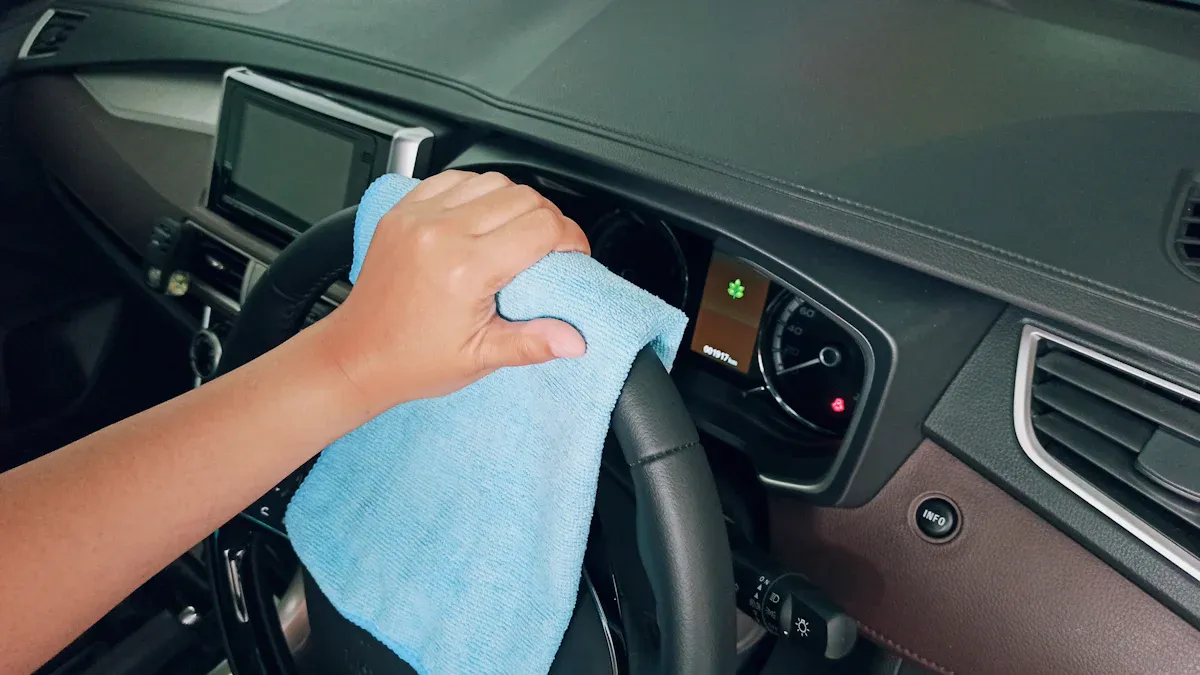
Spray your steering wheel cleaner onto a microfiber cloth. Never spray directly on the wheel.
Wipe the wheel in smooth, even motions. Cover the whole surface.
For deep cleaning, use a medium stiffness brush and work into the grain if your wheel is leather.
Wipe away any leftover cleaner with a clean, dry microfiber cloth.
Tip: Microfiber cloths trap dirt and dust better than regular cloths. They help you avoid scratches and keep your steering wheel looking new.
Leather Steering Wheels
Leather feels soft and looks fancy, but it needs gentle care. Follow these steps for a safe clean:
Cover your dashboard with a towel. This protects it from any spray.
Gather your supplies: a steering wheel cleaner made for leather, a leather brush, and two soft microfiber cloths.
Spray the cleaner onto the brush, not the wheel.
Gently scrub the leather in circles. Don’t press too hard.
Wipe off any extra cleaner with a clean cloth.
If you want, use a leather conditioner to keep the leather soft and prevent cracks.
Warning: Never use ammonia-based products or harsh cleaners on leather. These can dry out the leather and cause cracks. Avoid steam cleaners, too. They can strip away the dye and ruin the finish.
Faux Leather & Synthetic
Many cars use faux leather or synthetic materials. These are tough but still need the right touch.
Mix three parts all-purpose disinfectant with one part water.
Spray this mix onto a microfiber cloth. Don’t spray directly on the wheel.
Wipe the wheel all the way around. Use gentle pressure.
Take a clean, damp cloth and wipe off any leftover cleaner.
Dry the wheel right away with another microfiber cloth.
Note: Using too much cleaner or letting it sit can make the wheel slippery. Always dry the wheel well before you drive.
Plastic & Resin
Plastic and resin wheels are common in many cars. They’re easy to clean, but you still need to be careful.
Use a mild dish soap mixed with water.
Dip a microfiber cloth in the soapy water and wring it out.
Wipe the wheel, making sure to get into any grooves.
Rinse the cloth with clean water and wipe the wheel again to remove soap.
Dry the wheel with a fresh microfiber cloth.
Tip: Never use strong chemicals or rough sponges. These can scratch or dull the surface.
Metal & Wood
Metal and wood wheels look cool, but they need special care to stay shiny and smooth.
Dust the wheel with a dry microfiber cloth often.
For wood, use a small amount of wood polish on a cloth. Wipe gently.
For metal, use a damp microfiber cloth. Dry right away.
Keep your car’s interior cool. Heat and sun can damage wood and metal.
Never use harsh cleaners or leave the wheel wet.
Alert: Avoid using any chemicals that could make the wheel slippery. This can make driving unsafe.
Remember: Always use a steering wheel cleaner that matches your wheel’s material. This keeps your wheel safe and helps you keep a good grip.
Deep Cleaning & Maintenance
Removing Heavy Grime
Sometimes, your steering wheel gets really dirty. You might see sticky spots, dark stains, or grime stuck in the stitching. You can start with a steering wheel cleaner and a medium brush for most messes. If the dirt does not come off, you may need help from a professional detailer. These experts use special tools and products that clean deep without hurting your wheel. They know how to remove both visible dirt and hidden grime. Never use harsh wheel cleaners made for tires, like Armor All Shield Wheel Cleaner, because these can damage your steering wheel.
If you see food or grime stuck in the stitching, it is best to let a pro handle it.
Disinfecting Safely
You touch your steering wheel every time you drive. Germs can build up fast. In fact, research shows your steering wheel can have more germs than a public restroom toilet seat. You want to keep it clean to stay healthy. Use alcohol-free disinfectants and choose products marked safe for leather or plastic. Mild, pH-balanced cleaners work well. Some steering wheels even use materials like silver, copper, or zinc to fight bacteria.
Antimicrobial Agent |
Benefits |
|---|---|
Silver |
Reduces bacteria, cuts odors, boosts hygiene |
Copper |
Gives strong, long-lasting protection |
Zinc |
Helps keep your wheel clean and safe |
Maintenance Tips
You should wipe your steering wheel every week with antibacterial wipes or a car interior cleaner. This keeps germs away and stops dirt from building up. If you have not cleaned your wheel in a long time, or if you see heavy grime, call a professional. Regular cleaning helps your wheel last longer and keeps you safe on the road.
Clean hands mean a cleaner steering wheel. Wash your hands before you drive!
You keep your steering wheel safe when you match cleaning methods to its material. Skip harsh chemicals and rough tools. Clean your wheel often for better hygiene, grip, and style:
Removes germs
Extends wheel life
Improves comfort
Boosts your car’s look
If stains stick, check these costs:
Method |
Cost Estimate |
|---|---|
DIY Cleaning |
|
Professional Cleaning |
$50–$1,000 |
FAQ
Can I use baby wipes to clean my steering wheel?
You can use baby wipes in a pinch. They work for quick cleanups. For deep cleaning, use a product made for your steering wheel’s material.
How often should I clean my steering wheel?
You should clean your steering wheel once a week. This keeps germs away and helps your wheel last longer.
What should I do if my steering wheel feels sticky after cleaning?
Wipe it again with a damp microfiber cloth.
Dry it well.
If it stays sticky, try a different cleaner made for your wheel’s material.


