

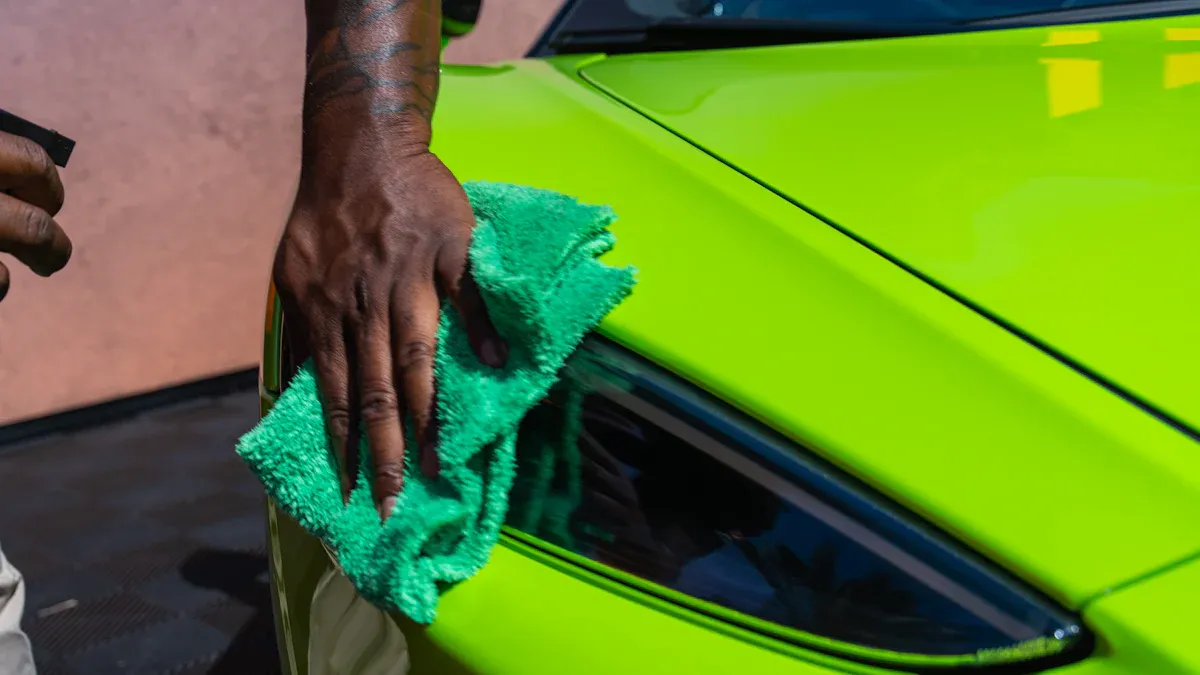
Choosing the best microfiber towel for car detailing feels easy when you know what matters. GSM, towel type, and fiber blend shape how well each towel works. Check out the table below for quick guidance:
Towel Type |
Recommended GSM |
Main Benefit |
|---|---|---|
Plush Microfiber |
800+ |
Maximum water absorption |
Waffle Weave |
300-500 |
Streak-free glass cleaning |
Plush for Interior |
600-800 |
Gentle on leather and vinyl |
Tip: Match each towel to the task. A 70/30 polyester to polyamide blend gives you softness and absorbency.
Key Takeaways
Choose microfiber towels based on GSM: 800+ for drying, 300-500 for glass and interiors.
Use a 70/30 polyester to polyamide blend for softness and absorbency; opt for 80/20 for tougher jobs.
Color code your towels to keep detailing organized and prevent cross-contamination.
Microfiber Towel Features
GSM Ratings
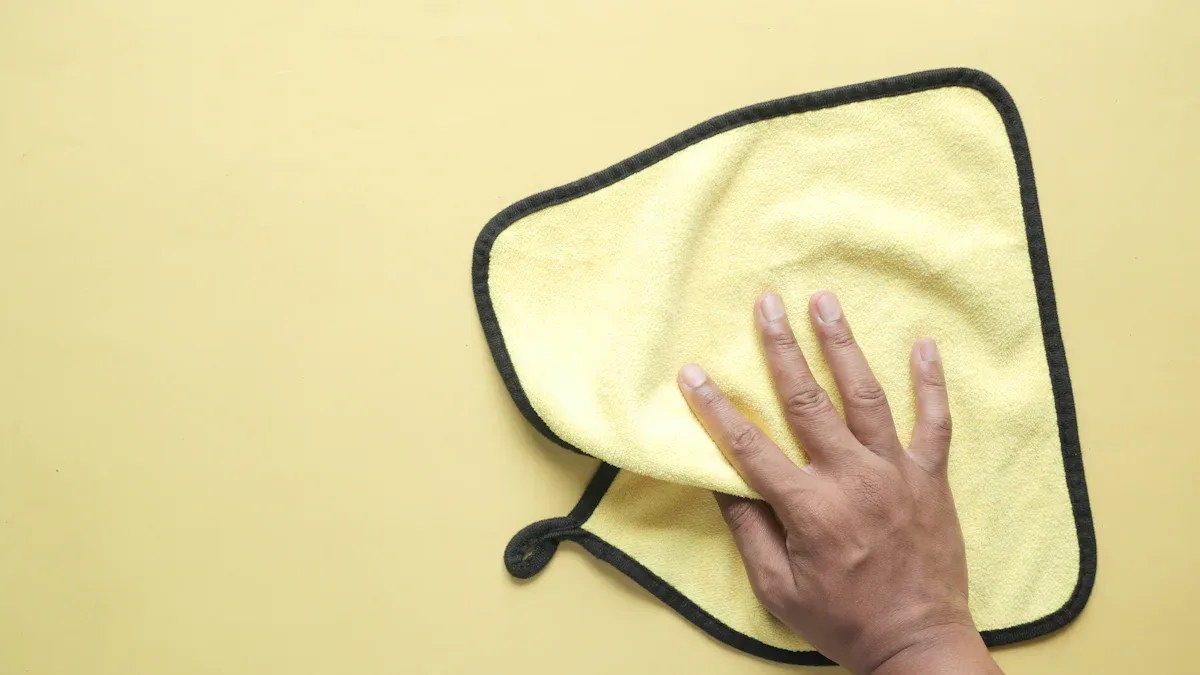
GSM stands for grams per square meter. It tells you how thick and absorbent a microfiber towel is. When you pick a towel with a higher GSM, you get more softness and better water absorption. These towels work best for drying your car’s paint because the longer fibers lift water and dirt away from the surface. This action helps prevent scratches and keeps your paint looking smooth. Lower GSM towels feel thinner and suit tasks like cleaning glass or wiping down interiors, where you want less bulk and more control.
Tip: For drying paint, choose a towel with a GSM of 800 or higher. For glass and interior cleaning, look for towels in the 300-500 GSM range.
Blend Ratio
The blend ratio shows how much polyester and polyamide make up your microfiber towel. Polyester gives the towel strength and durability. Polyamide adds softness and absorbency. Most towels use a 70/30 blend, which means 70% polyester and 30% polyamide. This mix creates millions of tiny pockets that trap dirt and water.
The 70/30 blend feels soft and absorbs well, perfect for delicate surfaces.
The 80/20 blend is tougher and lasts longer, great for heavy-duty cleaning.
Some towels use a 75/25 blend, but you’ll see 70/30 most often in car detailing.
If you want a towel that’s gentle on paint and interiors, stick with the 70/30 blend. For jobs that need more scrubbing power, try the 80/20 blend.
Edge Types
Edges matter more than you might think. The way a towel’s edge is finished can help prevent scratches on your car. Here’s a quick look at common edge types:
Edge Finish Type |
Description |
Scratch Risk |
|---|---|---|
Laser-cut edges |
Sealed fibers won’t unravel |
Low |
Overlocked edges |
Thread binding reduces fraying |
Moderate |
Raw edges |
Absolute scratch hazard – avoid completely |
High |
Many experts recommend edgeless towels or those with soft, clean-cut edges. These options help you avoid scratching your paint. Towels with rough or raw edges can damage your car’s finish, so it’s best to skip them.
Size Choices
Microfiber towels come in lots of sizes. Small towels, like 16"x16", work well for cleaning glass or wiping down dashboards. Large towels, up to 42"x69", make drying your car fast and easy. A popular size for all-around use is 20"x30". This size gives you enough surface area to dry your car without feeling bulky in your hands.
Use small towels for tight spaces and detail work.
Choose medium towels for general cleaning and buffing.
Pick large towels for drying big surfaces quickly.
Having a few different sizes in your kit helps you tackle every detailing job with ease.
Color Coding
Color coding makes your detailing routine safer and more organized. By using different colored towels for specific tasks, you avoid mixing chemicals and dirt from one area to another. Here’s a simple guide:
Color |
Purpose |
|---|---|
Green |
Exterior detailing tasks like wiping and buffing off detail sprays and waxes. |
Yellow |
Interior detailing tasks such as cleaning dashboards and upholstery. |
Tan |
Used for leather and vinyl cleaning, applying conditioners and cleaners. |
Black |
For cleaning dirty parts like undercarriages and tires. |
Gray |
Metal cleaning, polishing chrome and aluminum. |
Blue |
Dedicated for glass cleaning to prevent streaking and residues. |
Note: Always keep your glass cleaning towels separate. Using a blue towel just for windows helps you avoid streaks and keeps your glass spotless.
A well-chosen microfiber towel makes car detailing easier, safer, and more effective. When you pay attention to GSM, blend ratio, edge type, size, and color, you get better results and protect your car’s finish.
Microfiber Towel Types for Detailing
Choosing the right microfiber towel for each detailing step makes your job easier and your results better. Let’s break down the main types you’ll want in your kit and how each one helps you get that perfect finish.
Washing Towels
You want a towel that can soak up lots of water and lift dirt away from your car’s surface. Microfiber towels for washing stand out because they hold seven to eight times their weight in water. That means you can wash more of your car with fewer towels. The ultra-fine fibers trap dirt and keep it away from your paint, so you don’t scratch the finish. These towels also leave no lint behind, which helps you get a flawless look on glass and shiny surfaces.
Tip: Use a dedicated washing towel to avoid mixing dirt from wheels or lower panels with your paintwork.
Drying Towels
Drying your car is where you really see the difference between towel types. The best drying towels have a high GSM, which means they’re thick and super absorbent. You’ll find two main styles: waffle weave and plush microfiber. Each has its own strengths.
GSM Range |
Use Case |
|---|---|
300–500 GSM |
Lighter towels, good for interiors, glass, or wheels |
800–1200 GSM |
Standard for most car drying towels; balances thickness with ease of use |
1500–2000 GSM |
Premium towels built for maximum absorbency and swirl-free drying |

Here’s how the two main types compare:
Towel Type |
Characteristics |
Drying Performance |
|---|---|---|
Waffle Weave |
Streak-free finish on glass, effective for secondary drying, requires more contact time for initial drying |
Better for glass and final touches |
Plush Microfiber |
Softer, excellent absorption, can drag when saturated, especially on ceramic coatings |
Preferred for overall drying due to higher absorption capacity |
Waffle weave towels work best for glass and as a final drying pass. They leave no streaks and handle small amounts of water well.
Plush microfiber towels soak up a lot of water fast. They feel soft and protect your paint, but they can get heavy and drag if you use them on a very wet surface.
Pro tip: For most cars, an 800–1200 GSM plush towel gives you the best mix of absorption and easy handling.
Polishing Towels
When you polish your car, you want a towel that removes polish and grime without scratching the paint. Microfiber towels for polishing have a special structure that grabs dirt and holds onto it. This keeps your paint looking bright and shiny.
The intricate fibers pick up dirt and polish residue, so you don’t rub it back into the paint.
These towels are gentle and lint-free, which helps your car’s color pop.
They absorb leftover polish and water, so you don’t get water spots.
Choose a towel with a medium pile for polishing. It gives you enough softness to protect your paint but enough bite to remove residue.
Buffing Towels
Buffing towels help you remove wax or sealant and reveal a deep, glossy shine. You’ll find a few different nap styles for buffing:
Loop nap towels cut through wax and sealant quickly.
Split nap towels pick up residue and leave a clean surface.
Low nap towels work for general buffing and quick jobs.
Some brands, like Gyeon, offer towels with different nap types for every buffing need.
Pick a towel that matches your product and your style. If you want fast results, try a loop nap towel. For a final touch, use a split nap towel to pick up every last bit of residue.
Glass Cleaning Towels
Glass cleaning needs a special touch. You want a towel that leaves no streaks and no lint. The best microfiber towels for glass have a smooth texture or a waffle-weave pattern. These features help you get a crystal-clear finish.
Smooth or waffle-weave towels glide over glass and pick up dust and fingerprints.
Low-pile towels work best for glass because they don’t leave fibers behind.
Always keep your glass towels separate from other towels to avoid cross-contamination.
Note: Use a dedicated blue towel for glass. This simple trick helps you remember which towel to grab for streak-free windows.
With the right microfiber towel for each job, you’ll make your car shine and protect every surface. Try different types and see which ones fit your routine best.
Testing and Comparing Towels
Softness and Feel
When you pick up a towel, you want it to feel soft in your hands. A plush towel glides over paint and glass without grabbing or scratching. Run your fingers across the surface. If it feels rough or stiff, it might not be safe for your car’s finish. Softer towels protect your paint and make detailing more enjoyable.
Absorbency
Absorbency matters most when you dry your car. You want a towel that soaks up water quickly and leaves no streaks. Take a look at how different towels perform in a quick lab test:
Criteria |
Microfiber |
Cotton Terry |
Synthetic Chamois |
|---|---|---|---|
340ml |
180ml |
240ml |
|
Scratch Risk (microns) |
0.0 |
0.3 |
0.1 |
Lint Production |
Zero |
Heavy |
Minimal |
Durability (wash cycles) |
500+ |
150-200 |
300-400 |
You can see that a microfiber towel absorbs almost twice as much water as cotton. It also keeps your paint safe from scratches.
Durability
You want your towels to last through many washes. Try these simple tests at home:
Drip 10ml of water on the towel. If it takes longer than three seconds to soak in, it’s time for a new towel.
Shine a flashlight through the towel. If you see a lot of light, the fibers are wearing out.
Stretch the towel gently. If it doesn’t bounce back, the fibers may be broken.
These tests help you spot when a towel needs replacing.
Lint-Free Performance
Nobody likes lint on their car after detailing. Microfiber towels shine in lint-free tests. Here’s a quick comparison:
Towel Type |
Lint Performance |
|---|---|
Microfiber |
|
Cotton |
Leaves lint and fibers on paint |
If you wash your towels properly, you’ll get a clean, streak-free finish every time.
Care and Maintenance
Washing Tips
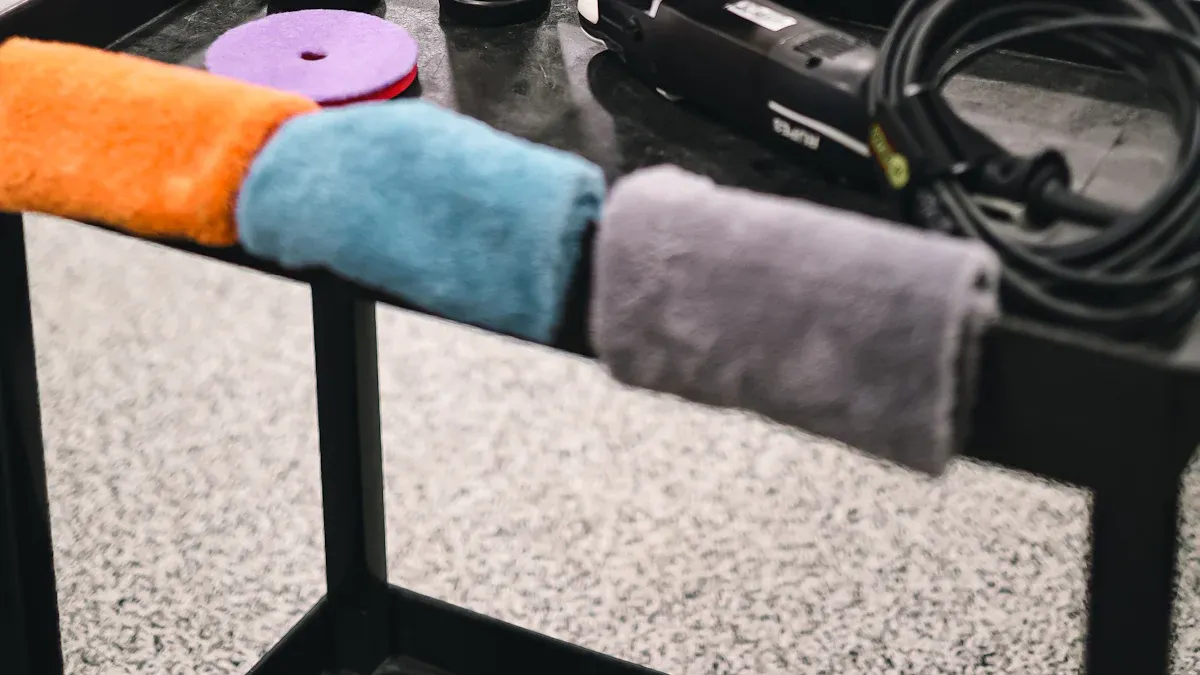
You want your microfiber towel to last and perform well. Wash towels after each use or when they look dirty. Always wash them separately from cotton to keep lint away. Use hot water with a splash of white vinegar if your towels lose their absorption. Air drying works best. Make sure towels have space to breathe so they dry evenly and avoid mildew. Toss in clean tennis balls or dryer balls when drying to keep fibers fluffy and prevent matting.
Tip: Never use fabric softener or dryer sheets. These products coat the fibers and reduce absorption.
Storage
Storing towels the right way keeps them clean and ready for your next detail. Use airtight containers to block dust and dirt. Label each container so you know which towels are fresh. Keep towels together in a dry, well-ventilated spot. Avoid direct sunlight and moisture to stop mold from growing. You want your towels to stay soft and free from contamination.
Store towels away from chemicals.
Make sure the storage area is clean and organized.
Mistakes to Avoid
You can make your towels last longer by skipping these common mistakes:
Using one towel for every job spreads dirt and chemicals.
Washing all towels together ruins paint towels.
Too much detergent clogs fibers and causes streaks.
High heat melts synthetic fibers.
Ignoring towel edges increases scratch risk.
Not downgrading old towels can damage paint.
Improper storage attracts dust and contamination.
Remember: Always check your towels before each use. Clean towels give you the best results every time.
Where to Buy Microfiber Towels
Trusted Brands
You want a microfiber towel that delivers great results every time. Trusted brands make a big difference in quality and durability. Here are some top names you can count on for car detailing:
Meguiar's
Griot's Garage
Mothers
CARPRO
Buff and Shine
Cobra Microfiber Products
Gyeon
SONAX
Pinnacle Natural Brilliance
Optimum
These brands use ultra-fine split fibers and offer towels with the right GSM for every detailing task. You get towels that feel soft, absorb well, and last through many washes.
Online and Local Stores
Finding the right towel is easy when you know where to look. Many online stores offer verified GSM ratings and fiber quality. Local auto shops often carry trusted brands, too. Check out this table with real customer feedback:
Reviewer Name |
Country |
Review Summary |
|---|---|---|
Luis T. |
United States |
Pearl Nano towels are on another level, there is no competition, they are the best in the market, period. |
Edwin C. |
United States |
Excellent towels for drying and applying liquid wax. Their size is ideal. |
Larry G. |
United States |
Ordered online and received on a timely matter. Will order again in the future. |
You can shop online for a wider selection or visit local stores for hands-on choices. Always check product details for GSM and fiber blend before you buy.
Budget Options
You do not need to spend a lot to get started. Budget-friendly towels can work for basic tasks. Two 16×24" waffle weave towels with 350-450 GSM are great for glass cleaning and rotation systems. These towels meet car detailing standards and help you save money.
Keep in mind, budget towels may not last as long as premium brands. They can lose absorbency and leave lint after several washes. Premium towels use denser fibers and special edging, so they stay soft and safe for your car’s paint. If you want towels that protect your finish and last longer, investing in a higher-quality option pays off.
Tip: Always check for ultra-fine split fibers and the correct GSM before buying any towel. This helps you avoid scratches and keeps your car looking its best.
Choosing the right microfiber towel makes car detailing easy. Check out this quick guide:
Best for |
GSM |
|
|---|---|---|
Low-Pile |
Interiors, coatings |
Low |
Twist Loop |
Drying exteriors |
High |
Plush |
Wax removal, drying |
Medium |
Glass |
Mirrors, windows |
Low |
Match towel type and GSM to each job for better results.
Wash towels separately, use mild detergent, and air-dry to keep them working longer.
FAQ
What GSM should I use for drying my car?
You want a towel with 800 GSM or higher. This absorbs water fast and protects your paint from scratches.
How do I keep microfiber towels lint-free?
Wash towels separately in warm water. Skip fabric softener. Dry with low heat. This keeps fibers clean and lint-free.
Can I use one towel for every detailing job?
No, you should use different towels for each task. Color coding helps you avoid mixing chemicals and dirt.


