


You want to hook up a pressure washer water tank for better cleaning power, right? Start by making sure your tank and washer match up. Use the right hoses and fittings so you get a steady water flow. Check your washer’s manual for compatibility. Good setup keeps you safe and helps your machine work its best. Don’t worry if this feels new—you’ve got this! Connecting your own system can be simple and rewarding.
Key Takeaways
Choose the right size water tank for your needs. A 100-gallon tank works for homes, while 200-300 gallons suits commercial use.
Position your tank higher than the pressure washer for better water flow. Each foot of height adds pressure, improving performance.
Use short, wide hoses made of strong materials to ensure steady water flow. A 1 1/4 inch hose is ideal for fast delivery.
Regularly check for leaks and maintain your setup. Inspect hoses and fittings to prevent issues and ensure optimal performance.
Follow safety precautions every time you use your pressure washer. Test GFCI outlets and wear protective gear to stay safe.
Pressure Washer Water Tank Setup

Choosing the Right Tank and Washer
You want your pressure washer water tank to match your cleaning needs. For most homes, a 100-gallon tank works well. If you clean for work or need to run your washer all day, pick a tank between 200 and 300 gallons. Here’s a quick look:
Use Type |
Minimum Capacity |
Maximum Capacity |
|---|---|---|
Residential |
100 gallons |
N/A |
Commercial |
200 gallons |
300 gallons |
Check your pressure washer type. Belt-drive washers handle water from tanks better than direct-drive models. Direct-drive washers need strong water flow, so they may not work as well with gravity-fed setups.
Positioning for Gravity Feed
Gravity feed means you let gravity move water from the tank to your washer. Place your pressure washer water tank higher than the washer. Each foot of height adds about 1 psi of pressure. Even a small tank on a step ladder can work if it sits above the washer. Make sure the end of your hose is lower than the water level in the tank. This setup helps water flow smoothly.
Tip: The bigger the height difference, the better your water pressure will be.
Selecting Hoses and Fittings
Short hoses give you better water flow. Try to keep your hose as short as possible. A wider hose also helps more water move to your washer. For example, a 100-foot hose with a half-inch diameter can deliver up to 13 gallons per minute.
Choose strong materials for hoses and fittings. Stainless steel and brass work well in most places. If you work outside a lot, look for UV-resistant or cold-resistant hoses. Use the right thread size for your connections. Common sizes include 3/8” NPT, 3/8” BSP, and 22mm M22. A threaded bung on your tank makes attaching hoses easier and helps prevent leaks.
Connection Steps
Attaching Hoses and Fittings
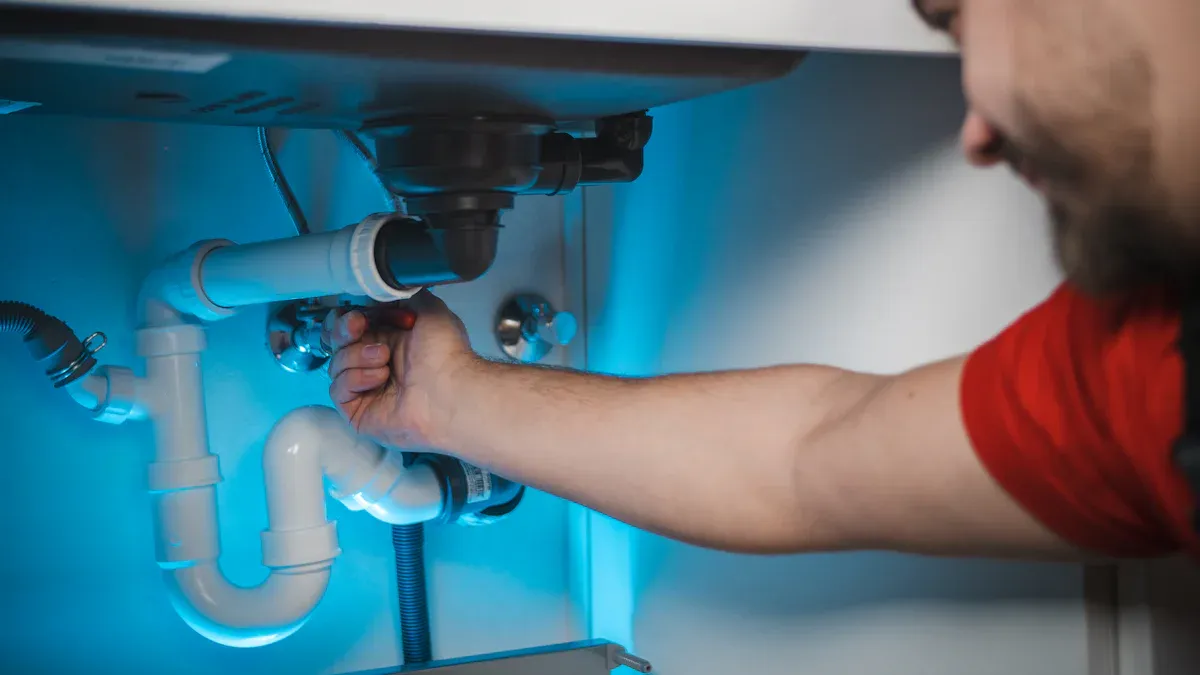
You want your pressure washer water tank setup to stay secure and leak-free. Start by making sure your tank sits on a flat, stable surface. This keeps everything safe and steady. Next, grab a non-collapsible suction hose. This type of hose won’t flatten or kink when water moves through it. Connect the hose from the tank outlet to your pressure washer’s pump.
Here’s a simple checklist to help you:
Secure your water tank in place.
Attach the non-collapsible suction hose to the tank outlet.
Add a float valve to control the water level.
Install a strainer at the tank outlet to catch big debris.
Place a drain valve at the bottom for easy cleaning.
Tip: Inline strainers work great for blocking rocks and leaves. They’re easy to clean and help your pump last longer.
You can also use a pressure washer filter for even better protection. This filter catches both large and tiny particles, so your water stays clean and your machine runs smoothly.
Connecting to the Pressure Washer Inlet
Now, you need to connect the hose from your pressure washer water tank to the washer’s inlet. Make sure the outlet pipe from the tank slopes downward or stays level. This helps water flow without getting stuck. If your hose goes up and down, air can get trapped and cause air locks. Air locks stop water from reaching your washer.
Here are some best practices:
Keep the outlet pipe level or slant it downward.
Add air release valves at high spots in the pipe. These valves let trapped air escape.
Always keep enough water in your tank. Running dry can damage your pump.
Note: A minimum water level in your tank keeps your pump safe and working right.
Ensuring Water Flow & Pressure
You want strong water flow for the best cleaning. Most pressure washers need at least 4 gallons per minute from the tank. Use a 1 1/4 inch hose from the tank to the pump. This size lets water move fast and steady.
You can check your flow rate with a simple test:
Open the hose and fill a 1-gallon container. It should fill in about 15 seconds.
For a 2.5-gallon container, aim for 37 to 38 seconds.
If your flow is too slow, try a shorter or wider hose. Make sure your tank sits higher than your washer for better gravity feed.
Here’s a quick look at common pressure needs for different jobs:
Task |
Recommended PSI |
|---|---|
Concrete cleaning |
|
Car cleaning |
1,200 – 1,900 |
Wood cleaning |
200 – 3,000 |
Trucks and tractors |
1,800+ |
Livestock shelters |
3,000+ |
Decks, fences, and siding |
2,000+ |
Paint stripping/graffiti |
3,200 – 4,200 |
Remember: Higher gallons per minute (GPM) means faster cleaning, especially for big jobs.
With these steps, you can connect your pressure washer water tank and get strong, steady water flow for every cleaning task.
Testing & Troubleshooting
Leak Checks
You want your setup to stay leak-free. Start by looking at all hose and fitting connections. Check O-rings and fittings for any signs of wear before each job. If you see cracks or dryness, replace them right away. You can use a little O-ring-safe lubricant to help O-rings last longer. Store your gear in a dry place to keep it in good shape.
Here are the most common sources of leaks in a pressure washer water tank setup:
Dirt or debris in the connection
Mismatched or low-quality fittings
Excessive wear and tear from frequent use
Improper installation or loose fittings
Tip: Clean all connections before you hook them up. This helps prevent leaks and keeps your washer running strong.
Confirming Water Supply
You need a steady water supply for your pressure washer to work well. Check that your water source gives enough flow. Make sure all hoses stay free from kinks and blockages. Watch the water flow while you run your washer. If the flow drops or stops, check the tank and hoses right away. A constant supply keeps your pump safe and your cleaning power strong.
Check the water supply for enough flow.
Make sure hoses are not kinked or blocked.
Watch for steady water during use.
Common Issues & Fixes
Sometimes, your pressure washer will not draw water from the tank. Here is a quick troubleshooting list:
Make sure the water mains tap is fully open.
Look for problems in the suction hose, like clogs or pinches.
If you follow these steps, you can fix most problems fast. You will keep your cleaning jobs on track and your equipment in top shape.
Safety & Maintenance Tips
Safe Operation
You want to stay safe every time you use your pressure washer with a water tank. Start by checking your setup before you turn anything on. Always test the ground fault circuit interrupter (GFCI) first. Plug your washer into a grounded outlet. This step helps protect you from electrical shock.
Here’s a quick table to help you remember the most important safety steps:
Safety Precaution |
Description |
|---|---|
Ground Fault Circuit Interrupter |
Always test the GFCI before use. |
Proper Grounding |
Plug into a properly grounded receptacle. |
Extension Cord Safety |
Keep cords out of standing water. Use heavy-duty cords. |
Personal Protective Equipment |
Wear rubber-soled shoes and protective goggles. |
Distance from Children |
Keep children at a safe distance during operation. |
You should also follow these simple rules every time you clean:
Never point the pressure washer at yourself or anyone else.
Always wear protective goggles and closed-toe shoes.
Do not use your pressure washer in small, enclosed spaces.
Tip: Keep your work area clear. Remove anything that could trip you up or get in the way.
Regular Maintenance
Taking care of your pressure washer and water tank helps them last longer. After each use, wipe down the unit to remove splashback and grime. This step keeps rust and buildup away. Store your washer and tank in a dry, heated spot. Cold weather can freeze water inside and cause damage.
Here are some easy maintenance habits:
Rinse hoses, wands, and nozzles to clear out detergent and debris.
Dry the pressure washer with a microfiber cloth to remove moisture.
Clean and dry all parts, including valves and attachment points.
Disconnect and clean hoses, wands, and nozzles after every job.
Add a fuel stabilizer to the tank if you plan to store your washer for a while.
Inspect hoses for wear and tear. Look for cuts, weak spots, or breakages. Replace any damaged parts right away.
Note: A quick visual check before storage can help you spot problems early and keep your setup running smoothly.
By following these safety and maintenance tips, you can enjoy powerful cleaning and keep your equipment in top shape for years.
You can connect your water tank to a pressure washer with confidence. Here’s a quick recap of the key steps:
Use a buffer tank for steady gravity-fed water.
Pick a washer with at least 5 GPM for best results.
Let the unloader bypass water back to the tank when off the trigger.
Avoid staying off the trigger for more than a minute.
Following safety and maintenance tips pays off:
Benefit |
Description |
|---|---|
Save money on repairs |
|
Optimal performance |
Your washer works its best every time. |
Increased lifespan |
Machines last longer with good habits. |
You’ve got this! Many DIY users have set up their own systems and now enjoy faster, more effective cleaning.
FAQ
Can I use any water tank with my pressure washer?
You need a tank that matches your washer’s flow rate. Check your washer’s manual for minimum GPM. Most tanks work if they have the right outlet size and fittings.
What if my pressure washer won’t draw water from the tank?
First, check for kinks or clogs in your hose. Make sure your tank sits higher than your washer. You can also check for air leaks at the connections.
Do I need a pump between the tank and the washer?
Most belt-drive washers work with gravity feed. If you use a direct-drive washer, you may need a booster pump for steady water flow.
How do I keep debris out of my pressure washer?
Use a strainer or filter at the tank outlet. Clean it often. This keeps dirt and leaves out of your washer and helps your pump last longer.
Can I use rainwater in my pressure washer?
You can use rainwater if you filter it first. Remove dirt and debris before it reaches your washer. Clean water helps your machine run better.


