

You want your bike to last longer and ride smoother, right? Regular cleaning with a good chain cleaner makes a huge difference. Studies show a lubricated chain can last up to 5,000 km, while an unlubricated one may only reach 2,500 km. Clean chains mean fewer repairs and more fun rides!
Chain Condition |
Average Lifespan |
|---|---|
Unlubricated Chain |
2,500 km |
Lubricated Chain |
5,000 km |
Key Takeaways
Regularly clean your bike chain to extend its lifespan. A clean, lubricated chain can last up to 5,000 km, while a dirty one may only last 2,500 km.
Use the right tools for cleaning. A chain cleaner, degreaser, and a small brush make the process easier and more effective.
Lubricate your chain after cleaning. Apply a small amount of lubricant to each link to ensure smooth operation and prevent dirt buildup.
Chain Cleaner Tools and Prep
What You Need
Before you start, gather your supplies. Having the right tools makes cleaning your bike chain much easier and faster. Here’s a quick list to get you set up:
Chain cleaner tool or device
Degreaser (bike-specific or household options)
Paintbrush or small brush
Rags or paper towels
Bike chain lubricant
Gloves (to keep your hands clean)
Chain keeper or dummy hub
Professional bike mechanics often use special tools for the best results. Check out this table for some top picks:
Tool Name |
Description |
|---|---|
Chain Keeper |
Holds the chain away from the frame for easy cleaning. |
Paintbrush |
Helps apply degreaser to every link. |
Park Tool CM-25 |
Clip-on chain cleaner that scrubs as you backpedal. |
Morgan Blue Cleaning Tools |
Simple options for washing down a chain. |
Feedback Sports / Abbey Bike |
High-quality models for serious cleaning. |
Park Tool DH-1 Dummy Hub |
Fits most bikes and keeps your chain steady. |
Tip: Chain cleaner devices work better than most household items. They scrub deep into the links, especially when you use a good solvent. If your chain is really dirty, kerosene can clean better than Simple Green. For a long-term solution, some riders use a dip-waxed chain setup to keep things extra clean.
Inspecting the Chain
Take a close look at your chain before you start cleaning. Spin the pedals and watch for stiff links, rust, or heavy grime. If you see a lot of dirt or the chain feels rough, a chain cleaner tool will help you get it back in shape. Always check for signs of wear, like stretched links or shiny spots. This quick inspection helps you spot problems early and keeps your rides smooth.
Chain Cleaning Steps
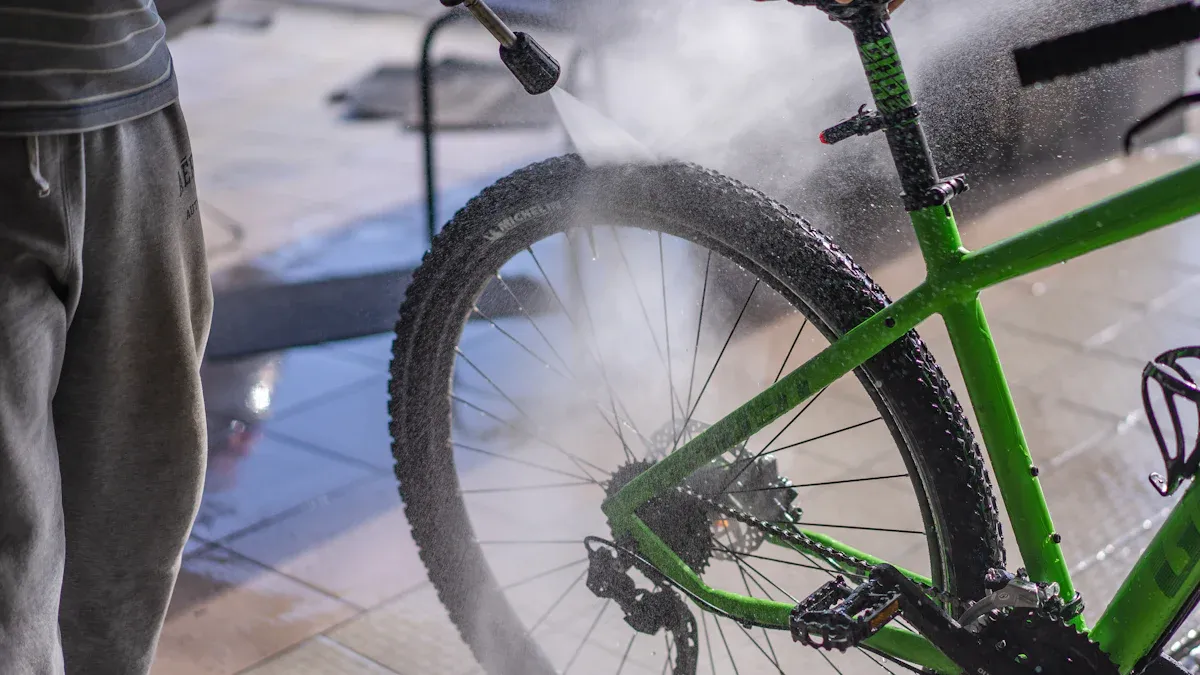
Cleaning your bike chain might sound tricky, but you can do it in just a few steps. Let’s break it down so you can keep your ride smooth and your chain lasting longer.
Degreasing and Scrubbing
Start by getting your bike ready. Place it on a repair stand or lean it against something sturdy. Shift your gears to the smallest cog and chainring. If you have a dummy hub, pop out the rear wheel and install it. This keeps your chain steady while you work.
Now, grab your chain cleaner or a stiff brush. Fill the chain cleaner with your favorite degreaser up to the fill line. Some popular choices are Pedro’s Pig Juice for general cleaning, Finish Line Citrus for a bright finish, or Smoove Prep if you want a spotless chain with no oily residue. If you don’t have a chain cleaner, a small paintbrush and a good degreaser will do the trick.
Here’s a simple step-by-step guide:
Attach the chain cleaner to your chain or dip your brush in degreaser.
Turn the pedals backward for at least 30 spins. This helps the brushes scrub every link.
Remove the chain cleaner and pour the dirty solvent into a safe container.
Tip: If your chain is super grimy, take it off the bike and soak it in degreaser for a deep clean. Let it sit for 10-15 minutes, then scrub with a brush before rinsing.
Rinsing and Drying
After scrubbing, rinse the chain to wash away leftover degreaser. You can use soapy water in the chain cleaner or just a wet rag. Run the chain through the cleaner again or wipe it down until it looks shiny.
Drying is important. Use a clean rag to wipe the chain until it feels dry. Let it air-dry for a bit, or use an air compressor if you have one. Make sure the chain is completely dry before you move on. Water left on the chain can stop the lubricant from sticking, which means your chain won’t run as smoothly.
Lubricating the Chain
Once your chain is dry, it’s time to add lubricant. Pick a lube that matches your riding style and weather. For most riders, a wet lubricant works well. Drip one drop on each link while spinning the pedals backward. Go slow and make sure you cover every rivet.
If you use chain wax, heat it up to about 75°C and let the chain soak for 5-10 minutes. For drip wax, put one drop on each link and let it dry for several hours.
Note: Don’t use too much lubricant. Too much can cause gunk to build up and attract dirt. Just a small amount on each link is enough to keep things running smoothly.
Wiping Excess Lube
After you apply the lubricant, let it sit for 5-10 minutes. This gives it time to soak into the links. Then, grab a clean rag and gently wipe off any extra lube from the outside of the chain. This step is key! Extra lube on the outside will only collect dust and dirt, making your chain dirty again.
Spin the crank a few more times to help the lube spread out. Your chain should look clean and feel smooth, not sticky or greasy.
Keeping your chain clean and properly lubed can boost your bike’s efficiency by up to 7%. Regular cleaning with a chain cleaner and the right lube means fewer repairs and more fun rides.
Maintenance Tips and Troubleshooting
Cleaning Frequency
You might wonder how often you should clean your bike chain. Here’s what many pro cyclists suggest:
Wipe down your chain after every other ride.
Deep clean and re-lube once a week or every 200 miles if you use oil-based lubricants.
Clean your chain after every rainy or muddy ride to prevent damage.
Mountain bikes need more frequent cleaning than road bikes because they pick up more dirt and mud. If you notice your chain slipping, sticking, or making odd noises, it’s time for a deep clean with your favorite chain cleaner.
Choosing Lubricant
Picking the right lube depends on the weather. Check out this table to help you decide:
Weather Condition |
Type of Lubricant |
Description |
|---|---|---|
Extremely Dry Conditions |
Dry Lube |
Thin oil, repels dirt, needs frequent reapplication. |
Extremely Wet Conditions |
Wet Lube |
Thick oil, protects against rust, stays on in rain. |
Continuous Rain |
Rainy Day Lube |
Sticks longer, perfect for long wet rides. |
All Weather |
Bio All Round Lube |
Works in any weather, eco-friendly. |
Avoiding Mistakes
You can avoid common chain cleaning mistakes by following these tips:
Always rinse your bike before using a chain cleaner to remove big debris.
Use a cleaner that’s safe for all bike parts.
Don’t forget to clean the drivetrain, not just the chain.
Never put new lube over dirty lube—clean first, then lube.
Keep pressure washers away from bearings and sensitive parts.
Fixing Chain Issues
If your chain makes noise after cleaning, try these steps:
Step |
What to Do |
|---|---|
1 |
Check if the chain runs straight over the derailleur. |
2 |
Watch for rubbing or odd movement while turning the cranks backward. |
3 |
Flush the chain with water-displacing oil, then re-lube after a short ride. |
4 |
Use a fast-drying solvent like naphtha if needed. |
To spot and fix tight links or chain stretch:
Inspect your chain for wear or damage.
Use a chain wear tool to check for stretch.
Replace any damaged or rusty links.
Adjust chain tension and check derailleur alignment for smooth shifting.
A worn chain can cause slipping, rough shifting, and lower your bike’s efficiency. Regular checks and cleaning keep your rides smooth and fun.
You now know how to keep your bike chain clean and running smooth. Regular cleaning means less friction, easier pedaling, and fewer repairs. You save money and enjoy longer rides. Make chain care part of your routine. Got tips or questions? Drop them in the comments—let’s help each other ride better!
FAQ
How often should you replace your bike chain?
You should check your chain every 500 miles. If you see stretch or damage, swap it out for a new one.
Can you use household products to clean your chain?
Yes, you can use dish soap or degreaser. Avoid harsh chemicals like bleach. Bike-specific cleaners work best for tough grime.
What happens if you never clean your bike chain?
Your chain will wear out faster. You might hear squeaks, feel rough pedaling, and need more repairs. Clean chains last longer and ride smoother.


