

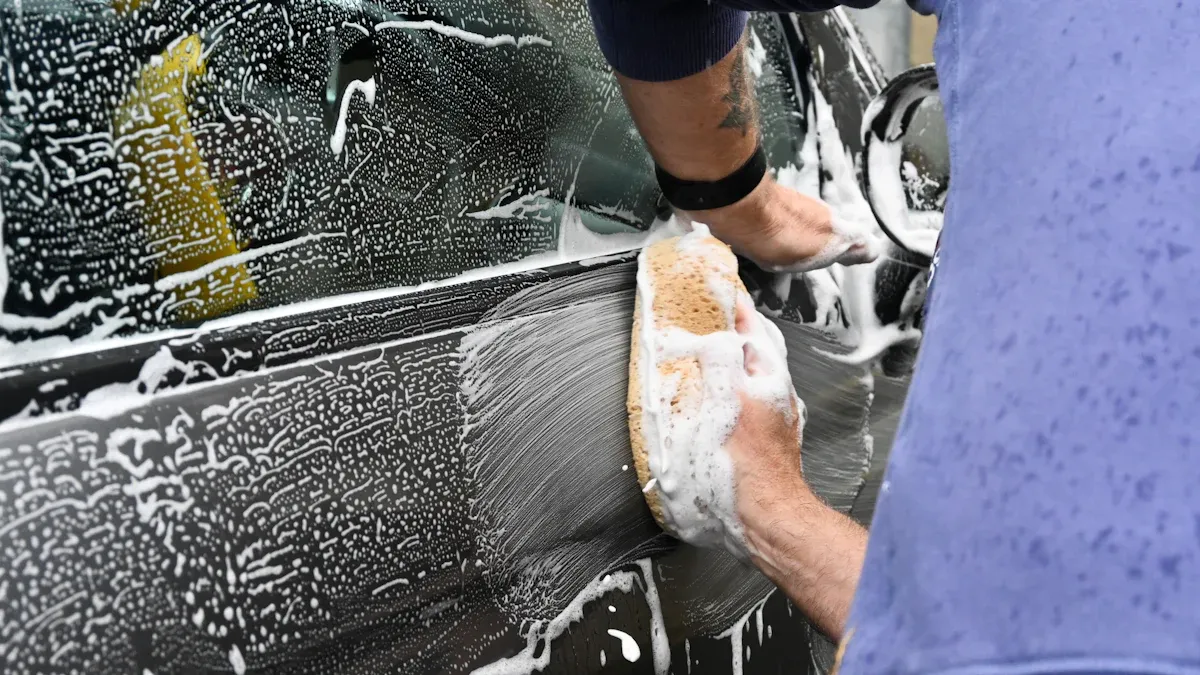
You might wonder if dish soap works as a substitute for car wash soap. Many people choose dish soap because it feels affordable, makes lots of suds, or helps strip old wax. However, harsh chemicals in dish soap can damage your car’s paint and remove protective layers you need to keep your car looking great.
Key Takeaways
Dish soap can damage your car's paint by stripping away wax and protective layers. Use it sparingly and only in emergencies.
Car wash soap is specifically designed to clean without harming your car's finish. It maintains the shine and protection your car needs.
Always reapply wax after washing your car, especially if you used dish soap. This helps keep your paint protected and looking great.
Can you use dish soap for car wash?
Is dish soap safe for car paint?
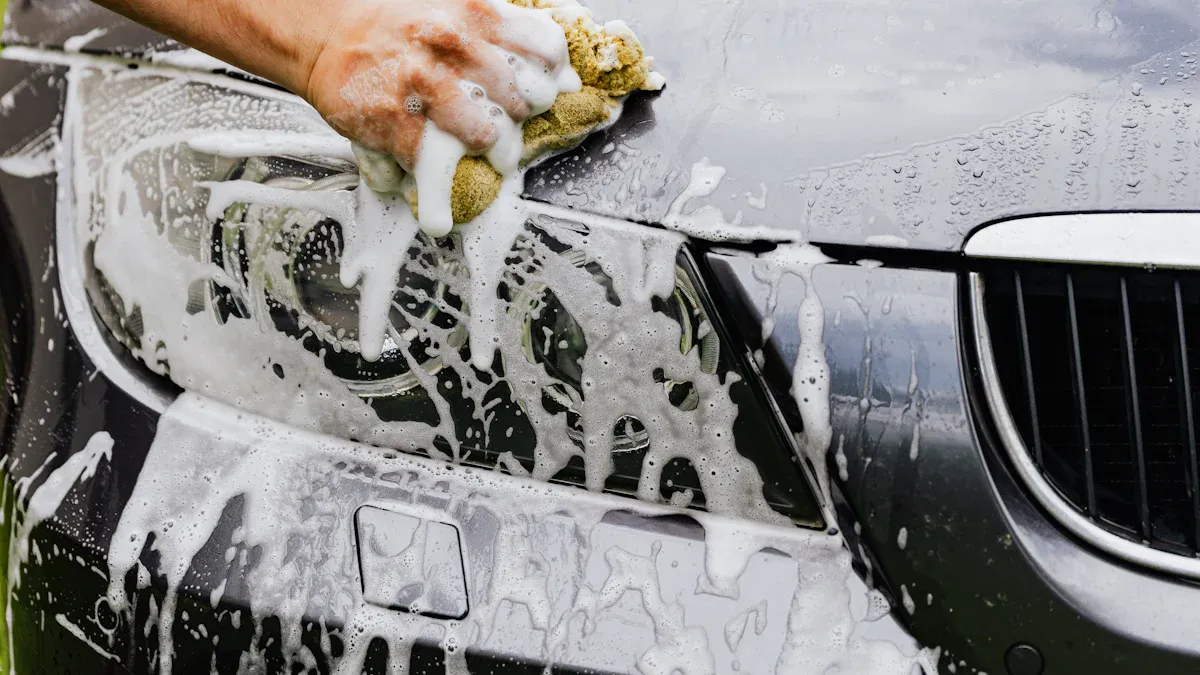
You might think dish soap gets your car clean, but it can actually harm your paint. Dish soap has strong chemicals that break down grease and food on plates. These same chemicals strip away the wax and sealants that protect your car’s finish. When you use dish soap, you risk leaving your paint exposed to sun, rain, and dirt. Over time, this can cause fading, dull spots, and even cracks in the rubber trim.
Let’s look at how dish soap compares to car wash soap:
Feature |
Car Wash Soap |
Dish Soap |
|---|---|---|
Neutral / paint-safe |
Often more aggressive |
|
Lubrication |
High — reduces friction |
Low — increases marring risk |
Effect on Wax/Sealant |
Preserves protection |
Strips protection quickly |
Trim & Rubber |
Safe when used as directed |
Can dry and discolor over time |
Rinsing |
Leaves no film |
May leave residue/streaks |
Dish soap uses strong degreasing surfactants. These cut through oil and grime fast, but they also remove wax, sealants, and ceramic coatings. You might notice your car looks clean, but it loses its shine and protection. Dish soap can dry out rubber and plastic parts, making them fade or crack. Low lubrication means dirt can scratch your paint as you wash.
When is dish soap acceptable?
You should avoid using dish soap for regular car washes. There are only a few times when it makes sense:
Before a full detail or paint correction: If you plan to remove old wax or polish and start fresh, dish soap can help strip away old layers.
In an emergency: If you run out of car wash soap and need to clean your car right away, you can use diluted dish soap as a last resort.
Tip: Always rinse your car very well if you use dish soap. Try to wax your car after washing to restore protection.
You should not use dish soap every time you wash your car. Frequent use can lead to swirl marks, faded trim, and a dull finish. Car wash soap is designed to clean gently, protect your paint, and keep your car looking new. It has a balanced pH and high lubrication, so dirt slides off without scratching. The foam sticks to your car, lifting grime for easy rinsing.
If you want your car to stay shiny and protected, reach for car wash soap whenever possible. Save dish soap for special cases, and always follow up with a fresh coat of wax.
Soap choice and car finish
Effects on paint and wax
When you pick a soap for your car, you want something that cleans without causing harm. Dish soap might seem like a quick fix, but it can break down the wax and clear coat that protect your car’s finish. Laboratory tests show that dish soap strips away wax and sealants. This leaves your paint exposed to fading, oxidation, and even corrosion. Your car can start to look dull, and you might notice more scratches or spots over time.
Dish soap contains aggressive surfactants. These chemicals work great on greasy dishes, but they are too harsh for your car’s delicate surface. The pH level in dish soap is often more aggressive than car wash soap. Take a look at this comparison:
Feature |
Car Wash Soap |
Dish Soap |
|---|---|---|
pH |
Neutral / paint-safe |
Often more aggressive |
Effect on Wax/Sealant |
Preserves protection |
Strips protection quickly |
If you use dish soap often, you risk losing the shine and protection that wax provides. Your car’s finish needs gentle care to stay looking new.
Why car wash soap is recommended
Car wash soap is the best choice for keeping your car clean and protected. Automotive manufacturers recommend it for several reasons:
Dish soap contains harsh chemicals that can damage car paint.
It is difficult to rinse off dish soap, which can leave streaks.
Dish soap strips wax and other protection, harming your car’s finish.
Car wash soaps are pH neutral, so they are gentle on your car’s surface.
They remove dirt and grime without hurting the paint.
Using car wash soap helps maintain the wax and sealants that keep your car safe.
Experts say dish soap can speed up oxidation and fade trim. Its alkalinity makes it harder to rinse, which can break down wax and sealants.
If you want your car to stay shiny and protected, reach for car wash soap every time you wash. You will keep your paint safe and your car looking its best.
Dish soap vs. car wash soap
Pros and cons of dish soap
You might think dish soap is a quick fix for washing your car. It does have some upsides, but the downsides are hard to ignore. Here’s a simple table to help you see the difference:
Pros of Dish Soap |
Cons of Dish Soap |
|---|---|
Saves a little money |
|
Cuts through grease and grime |
Can damage leather, vinyl, and rubber |
Used by some detailers for deep cleaning |
Increases risk of tiny scratches (micro-marring) |
Dish soap can lead to micro-marring if you use it often.
Some detailers use it for special jobs, but most people should avoid it.
Car soap is better for protecting your car’s finish.
How car wash soap protects your car
Car wash soap is made just for cars. It cleans dirt and grime without hurting your paint or stripping away wax. Here’s how it stacks up:
Feature |
Car Wash Soap |
Dish Soap |
|---|---|---|
Formulation |
Made for cars, gentle and pH-balanced |
Made for dishes, strong degreasers |
Effect on Wax/Sealants |
Keeps wax and sealants safe |
Strips away protection |
Impact on Paint Finish |
Safe and keeps paint shiny |
Can make paint dull and damaged |
Effect on Other Surfaces |
Safe for rubber and plastic |
Dries out rubber, damages seals |
Car wash soap is pH neutral and gentle.
It helps your car keep its shine and protection.
Dish soap is too harsh for car paint and can leave your car looking dull.
Wax stripping and long-term risks
If you use dish soap a lot, you’ll notice your car loses its shine. Dish soap removes the wax that protects your paint. Over time, this leaves your car open to sun, rain, and dirt. You might see dull paint, faded spots, or even cracks in rubber trim. The oil-busting power of dish soap is great for dishes, but it’s bad news for your car’s finish. Repeated use means more damage and less protection.
Tip: If you ever use dish soap, always add a fresh coat of wax after washing to help protect your paint.
Alternatives to car wash soap
Safe household options
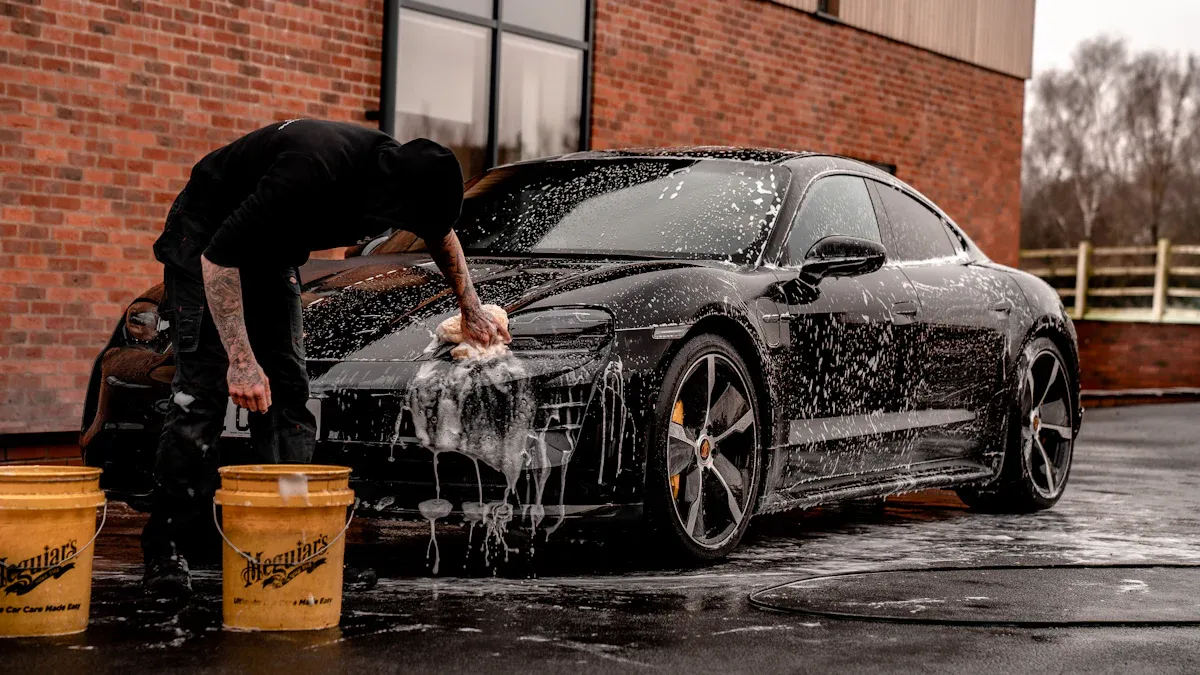
You might not always have car wash soap on hand. Sometimes, you need to get creative with what you have at home. The good news? Some household products can work in a pinch, as long as you pick the right ones. Look for options that are gentle, pH-balanced, and safe for your car’s protective layers.
Here’s what you should look for in a safe alternative:
Characteristic |
Description |
|---|---|
pH-balanced |
Gentle on your car’s protective layers. |
Formulated with lubricants |
Helps lift and trap dirt to minimize scratches. |
Safe for waxes and sealants |
Preserves the shine and protection you’ve already applied. |
A few safe household options include:
Baby shampoo (unscented and diluted): It’s gentle and usually pH-balanced.
Mild liquid hand soap (without antibacterial agents or harsh chemicals): Use only a small amount and dilute it well.
Water and a microfiber towel: Sometimes, a good rinse and gentle wipe can remove light dust or pollen.
Tip: Always test a small spot first. Rinse your car well to avoid any residue.
Products to avoid
Not every cleaner in your house is safe for your car. Some products can do more harm than good. You want to keep your paint, trim, and interior looking their best, so steer clear of these common household cleaners:
Product |
Risk |
|---|---|
Ammonia-based glass cleaner |
Can degrade tint, dry out rubber seals |
All-purpose cleaners |
Often too harsh for delicate interior surfaces |
Bleach or peroxide-based products |
Can stain or break down plastics and fabrics |
Scouring powders or scrub sponges |
Abrasive enough to scratch paint or plastic trim |
You should also avoid laundry detergents, kitchen cleaners, and anything with strong scents or dyes. These can strip wax, leave streaks, or even damage your car’s finish.
Note: If you’re not sure about a product, skip it. Stick with soaps and cleaners made for cars whenever you can.
Washing your car without car wash soap
Step-by-step guide
You can still get your car clean even if you run out of car wash soap. Here’s a simple way to do it:
Grab a few clean microfiber towels. Snip off any tags and fold each towel into quarters.
Spray water or your chosen gentle cleaner (like diluted baby shampoo) onto one section of your car and onto the towel.
Wipe the area using straight lines, not circles. This helps prevent swirl marks.
Flip the towel to a fresh side and buff the surface for a nice shine.
Move to the next section and repeat until you finish the whole car.
Tip: Always rinse your car well after washing, especially if you used dish soap. This helps remove any leftover soap that could harm your paint.
Best practices for car care
You want your car to look its best, so keep these tips in mind:
Avoid using dish soap for regular washes. It strips away wax and dries out your paint.
Pick a gentle, pH-balanced cleaner if you can.
Always reapply wax or sealant after washing, especially if you used dish soap. This keeps your paint protected and shiny.
Use soft microfiber towels to prevent scratches.
What to avoid
Some products can do more harm than good. Stay away from:
Laundry detergent. It has harsh chemicals that can damage your paint.
Wheel cleaners. These are too strong for your car’s body and can ruin the clear coat.
Rough sponges or old rags. These can leave swirl marks and scratches.
Remember: Gentle products and soft towels help your car stay shiny and protected. Waxing after washing gives your paint the shield it needs. 🚗✨
You now know dish soap strips wax and can harm your car’s finish. Car care experts suggest using car wash soap for regular cleaning.
Dish soap removes protection and can dull paint.
-
Always wax after using dish soap.
For the best shine, stick with products made for cars!
FAQ
Can you mix dish soap with car wash soap?
You should not mix them. Dish soap strips wax, while car wash soap protects it. Stick with car wash soap for the best results.
What happens if you use dish soap on your car once?
You might remove wax and leave your paint unprotected. Just remember to rinse well and add a fresh coat of wax after.
Is it okay to use dish soap on car wheels?
You can use dish soap on wheels in a pinch. It removes brake dust, but always rinse thoroughly and avoid using it on painted or coated wheels.


