

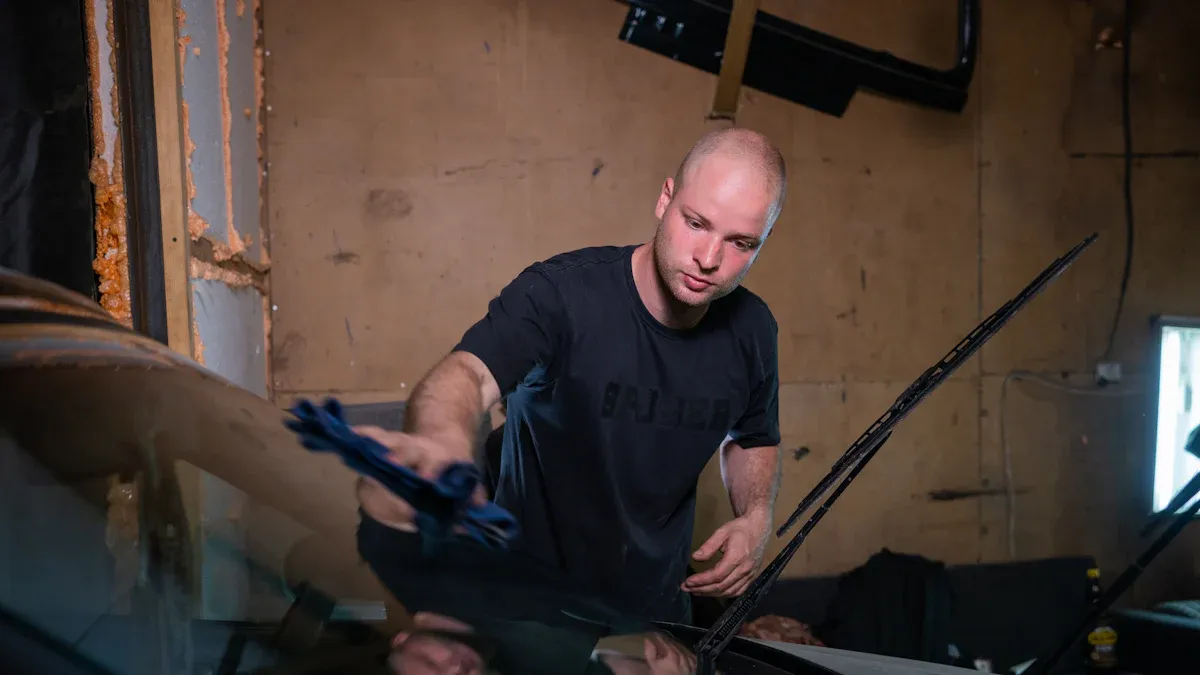
You can clean inside your windshield with just a good glass cleaner and a microfiber towel. Skip products that leave sticky residue or strong smells. Many people find it awkward to reach every corner, especially with modern cars trapping more grime. With the right tools, you will get streak-free glass every time.
Key Takeaways
A clean windshield improves visibility and safety while driving. Regular cleaning helps you spot obstacles quickly.
Use ammonia-free glass cleaners and microfiber towels for the best results. These tools prevent streaks and scratches.
Clean your windshield every three months for optimal clarity. More frequent cleaning is necessary if you smoke or drive in dusty conditions.
Why Clean Inside Your Windshield
Safety and Visibility
You want to see everything on the road, right? When you clean inside your windshield, you make sure your view stays sharp and clear. Dirt, streaks, and bug splatter can block your sight, especially when the sun hits just right or during rainy weather. If you keep your windshield spotless, you react faster to things like sudden stops, animals crossing, or a ball rolling into the street. Modern cars even use cameras and sensors behind the glass, so a clean inside helps those safety systems work better.
Streaks and smears can make it tough to see at night or in low light.
Safety experts say you should clean inside your windshield often to keep visibility high.
Tip: If you notice haze or fog on your windshield, it might be from moisture inside your car. This happens a lot in winter or when the weather changes fast.
Preventing Glare
Glare can sneak up on you, especially when driving at night or facing bright sunlight. Grime on the inside of your windshield creates an oily film that scatters light. This film comes from dashboard materials, skin oils, and leftover cleaning products. At night, headlights from other cars hit this film and cause a starburst effect, making it hard to see clearly. During the day, glare can slow your reaction time and strain your eyes.
Dirt and grime scatter light, making glare worse.
Even a thin layer of film can distort your view of road signs or people.
Cleaning inside your windshield stops glare from sunlight and headlights.
If you keep up with cleaning, you drive safer and feel more confident behind the wheel.
Tools and Products for Cleaning

Best Cleaning Solutions
You have a lot of choices when you want to clean inside your windshield. The best option is a glass cleaner made for cars. Look for one that says “ammonia-free” on the label. Ammonia can damage tinted windows and make the air inside your car hard to breathe. If you want something safer for the environment, try a homemade mix. You can use equal parts vinegar and water, or add a drop of dish soap for extra cleaning power. Some people even add a little cornstarch to help polish the glass. Eco-friendly cleaners made from plants and essential oils also work well and do not harm the planet.
Essential Tools
You need the right tools for a streak-free finish. Microfiber towels are the best choice. They soak up a lot of liquid, trap dirt, and leave no streaks or lint behind. You can wash and reuse them up to 500 times, so they save money and cut down on waste. Here’s a quick look at how microfiber compares to paper towels:
Feature |
Microfiber Towels |
Paper Towels |
|---|---|---|
Absorbency |
Absorbs over six times its weight |
Limited absorbency |
Durability |
Reusable up to 500 times |
Single-use |
Cleaning Effectiveness |
Streak-free, lint-free |
Leaves streaks and fibers |
Environmental Impact |
Reduces waste and chemical use |
Contributes to waste |
You can also use a waffle weave towel for polishing. If you have trouble reaching corners, a windshield cleaning tool with a pivoting head helps a lot.
What to Avoid
Stay away from paper towels and regular cloths. They leave lint and streaks on the glass. Generic cleaners can also cause streaks or even scratch the surface. Never use ammonia-based products. These can damage window tint, dry out rubber seals, and make glare worse. Ammonia fumes can also irritate your eyes and lungs.
Tip: Always pick lint-free towels and glass-specific cleaners for the best results when you clean inside your windshield.
How to Clean Inside Step-by-Step
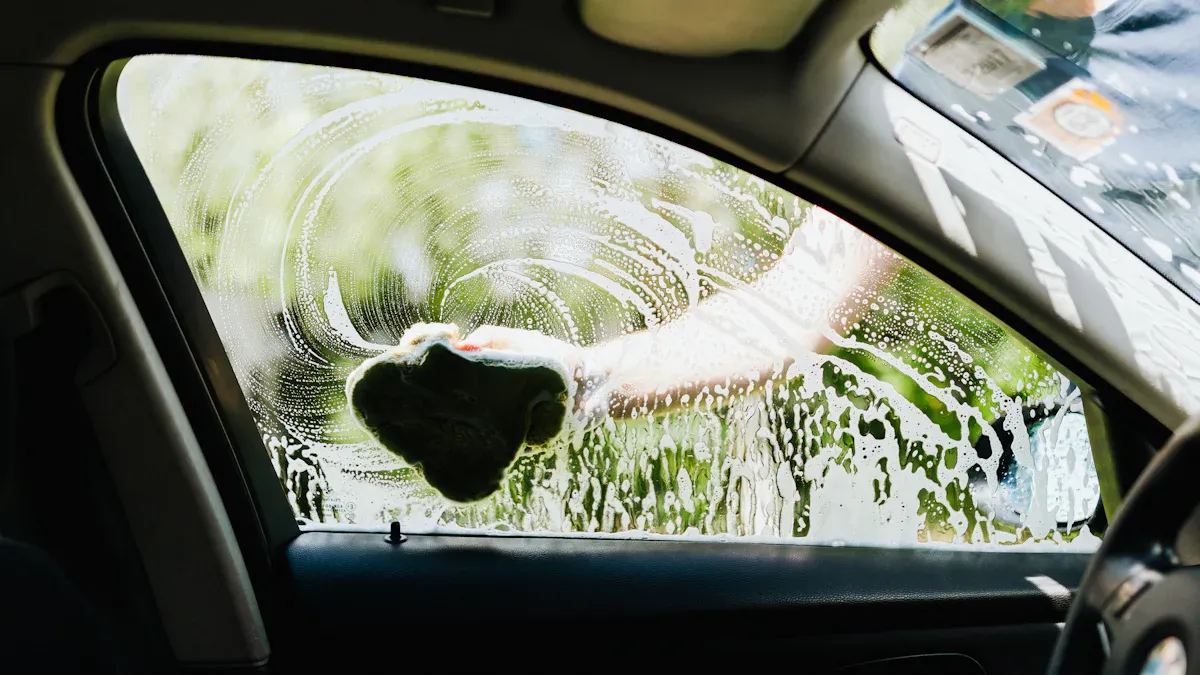
Preparation
Before you start, gather everything you need. Grab two clean microfiber towels, your favorite glass cleaner (make sure it’s ammonia-free), and a small bowl if you want to mix a homemade solution. If you have a waffle weave towel, keep it nearby for polishing. You might want a windshield cleaning tool if you find it hard to reach the corners.
Start by removing any dust from the glass. Use a dry microfiber towel and gently wipe the inside of your windshield. Try not to touch the dashboard, since cleaner can drip and leave marks. This first step helps you avoid rubbing dirt into the glass later.
Tip: Always spray your cleaner onto the towel, not directly onto the glass. This keeps the cleaner from running down onto your dashboard or electronics.
Cleaning Technique
You want to clean inside your windshield in sections. Work on about a quarter of the glass at a time. This way, the cleaner won’t dry before you wipe it off. Here’s a simple sequence to follow:
Spray your cleaner onto a microfiber towel.
Wipe the glass from top to bottom. This helps you control drips and makes sure you don’t miss any spots.
Use a clean, dry part of the towel to buff the glass. This step removes any leftover cleaner and helps you get a streak-free finish.
Move to the next section and repeat.
If you see haze or stubborn spots, mix equal parts rubbing alcohol and water. Dampen a towel with this mix and gently wipe the area. Alcohol works well for removing haze and oily residue, but don’t let it touch vinyl surfaces for too long.
Streak-Free Tips
Nobody likes streaks on their windshield. You can avoid them by following a few simple tricks. Check out this table for the best ways to keep your glass clear:
Technique |
Description |
|---|---|
Use distilled water |
Prevents mineral spots that cause streaks. |
Vinegar and warm water mixture |
Cleans well and helps stop streaks. |
Minimize soap |
Too much soap leaves residue. Use just a drop if needed. |
Avoid paper towels |
They leave lint and streaks. Stick with microfiber towels. |
Buff after cleaning |
Always buff with a dry towel for a shiny, streak-free finish. |
Note: If you want to clean inside your windshield with a homemade solution, try mixing vinegar and warm water. It’s safe, cheap, and works great.
Handling Tough Grime
Sometimes, regular cleaning doesn’t cut it. Tough grime can build up from things like plastic outgassing, tobacco smoke, or even coolant leaks. Here’s a look at what might be causing the mess:
Substance |
Effect on Windshield |
|---|---|
Outgassing from plastics |
Leaves a hard-to-remove film |
Oils from newspaper ink |
Adds sticky grime |
Coolant leaks |
Can create a greasy layer |
Tobacco smoke |
Forms a stubborn, hazy film |
To tackle these, try one of these cleaners:
Use a mild detergent for gentle cleaning.
Mix vinegar and dish soap for a strong at-home solution.
If you still see haze, use a rubbing alcohol and water mix. Wipe the area, then buff with a clean towel.
Troubleshooting Common Issues
Sometimes, streaks or haze just won’t go away. Don’t worry—there are extra steps you can take:
Use an all-purpose cleaner first, then follow with a quality glass cleaner.
If debris sticks to the glass, try claying the windshield.
For really stubborn spots, polish the glass with a compound like M105 and a soft pad.
After polishing, wipe the glass with isopropyl alcohol to remove any leftover residue.
Recurring haze can be a sign of moisture inside your car. Dry the cabin after storms, replace your cabin air filter every year, and use your climate control system to manage humidity. Turn off recirculation to keep fresh air moving. If you spot leaks, get them fixed right away. You can also use anti-fog treatments to help keep your windshield clear.
Tip: Keep your windshield clean inside and out to prevent fog and glare. A little extra effort goes a long way for safe driving!
You can keep your windshield spotless with a few simple steps. Clean every three months for clear vision and safety. Use microfiber towels and ammonia-free cleaners to avoid scratches. Regular cleaning gives you better visibility, less glare, and helps your windshield last longer.
Better visibility in all weather
Less glare at night
Longer windshield life
FAQ
How often should you clean inside your windshield?
You should clean inside your windshield every three months. If you smoke or drive in dusty areas, clean it more often for better visibility.
Can you use household glass cleaner on your car windshield?
You should avoid household glass cleaners. Many contain ammonia, which can damage tint and leave streaks. Use ammonia-free cleaners made for cars.
What if you still see streaks after cleaning?
Try buffing with a dry microfiber towel.
Use distilled water for your cleaning mix.
Clean in the shade to prevent quick drying.


