

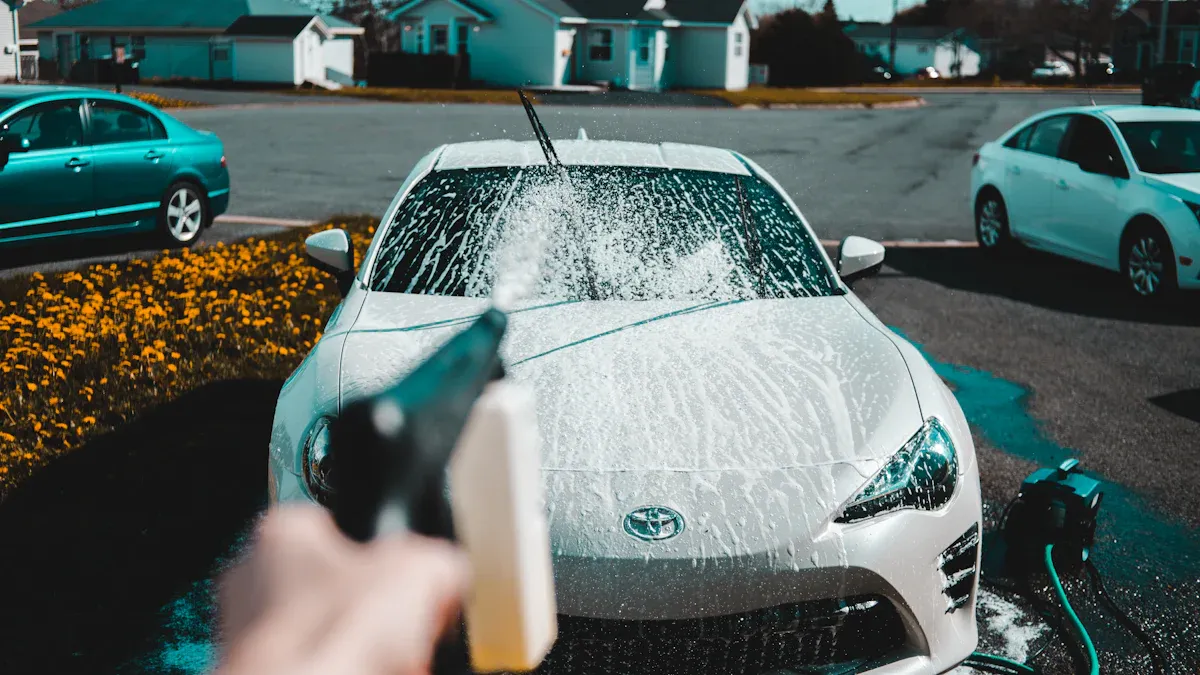
You might think rainwater can clean your car, but it often leaves spots and misses stubborn dirt. Washing car with water works well if you use clean microfiber towels and rinse often. Watch out for mistakes like scrubbing in circles or using old sponges, which can scratch your paint.
Key Takeaways
Use clean microfiber towels to wash your car. They lift dirt without scratching the paint.
Always rinse your towels often and switch to a fresh side to avoid spreading grit.
Wash your car in the shade to prevent water spots and ensure a spotless finish.
Preparation for Washing Car with Water
Tools You Need
Before you start washing car with water, gather the right tools. You want clean microfiber towels because they lift dirt without scratching your paint. Old towels or sponges can trap grit and leave marks. Grab a bucket or use a hose with gentle pressure. Lukewarm water works best. It loosens dirt but does not harm your car’s finish. Hot water can damage the clear coat and cause problems with the paint. Here is a quick guide:
Temperature Range |
Recommendation |
|---|---|
35°F to 50°F |
Safe for washing, prevents freezing. |
Warm Water |
Helps clean, but avoid hot water. |
Tip: Always use fresh towels for each section of your car. Rinse them often to keep grit away.
Choosing Time and Place
Pick the right spot and time for washing. Shade is your friend. Sunlight heats up your car’s surface, sometimes over 140°F. Water dries fast and leaves white spots or streaks. These spots contain minerals that can bond to the clear coat and dull your paint. Over time, they get harder to remove and may damage the finish. Wash your car on a cool surface, either early in the morning or late afternoon. This way, water does not evaporate too quickly and you avoid water spots.
Note: Avoid washing car with water in direct sunlight. Shade keeps your car cooler and helps you get a spotless finish.
Washing Car with Water: Step-by-Step

Initial Rinse
You want to start with a good rinse before you touch your car. This step helps remove loose dirt and dust, so you don’t rub grit into the paint. Begin at the top of your car and work your way down. Dirt flows off easier this way. Use a hose with a spray attachment if you have one. The spray helps knock off dirt without hurting the paint. Don’t forget to rinse the undercarriage. Mud and grime hide there, especially after rainy days.
Here’s a simple rinse routine:
Start at the roof and rinse downward.
Rinse the wheels and undercarriage last.
Tip: Always use clean water. Hard water can leave spots and minerals on your car. If you notice spots, wipe them off before the water dries.
Safe Washing Technique
After rinsing, you’re ready to wash. Grab your clean microfiber towels. Fold each towel into quarters. This gives you eight clean sides for wiping. Start at the top and move down, saving the lower panels for last. Lower panels pick up the most dirt, so you want to avoid spreading it to cleaner areas.
Here’s how you can wash safely:
Use plenty of clean towels. Switch to a fresh side often.
Wipe gently. Don’t scrub hard or use circles. Straight lines work best.
Rinse your towels in clean water after each section. This keeps grit away from your paint.
If you want to save water, try the rinseless wash technique. It uses much less water than traditional methods. You just dip your towel in a special solution, wipe the car, and dry. This method is eco-friendly and works well if you live where water is limited.
Note: Washing car with water works for light dirt and dust. If your car has heavy mud or sticky stuff, plain water may not clean it safely. You might need a gentle soap or a special cleaner for those spots.
Drying the Car
Drying is just as important as washing. If you let your car air dry, you’ll see water spots. These spots come from minerals in the water. Use a high-quality microfiber towel to dry your car. Microfiber lifts water without scratching the paint. Chamois towels can flatten and trap dirt, which may scratch your car.
Material |
Scratches per foot |
Features |
|---|---|---|
Microfiber |
0.3 |
Lifts water, reduces swirl marks by 62% |
Chamois |
2.1 |
Flattens, traps dirt, can scratch paint |
Pat the surface dry instead of rubbing. Work section by section, starting at the top. Change towels when they get wet. Dry your car in the shade to avoid streaks. If you want a perfect finish, use a towel and a blow dryer together. The towel gets most of the water, and the blow dryer reaches tricky spots.
Tip: If you use hard water, dry your car quickly. Waxing your car or using a vinegar solution can help remove any spots that show up.
Washing car with water can be easy and safe if you follow these steps. You use less water, protect your paint, and keep your car looking great.
Safety and Effectiveness Tips
Preventing Scratches
You want your car’s paint to stay smooth and shiny. Scratches can happen if you use the wrong technique or dirty towels. Try these methods to keep your paint safe:
Technique |
Description |
|---|---|
Light Wiping |
Use a gentle touch. Don’t scrub hard. |
Towel Management |
Flip and re-fold your towel often. This keeps dirt away. |
Pre-soaking |
Wet the area before wiping. Dirt loosens up and comes off easier. |
Clean Microfiber |
Use a fresh microfiber towel for each panel. |
Roll Method |
Roll the towel as you wipe. This reduces contact and friction. |
Tip: Always check your towels for grit before you start. Clean towels protect your paint.
When to Avoid Water-Only Washing
Sometimes, water alone cannot handle tough messes. Sticky substances, heavy mud, or oily spots need more than just water. If you see grease or thick grime, you should use a gentle soap or a special cleaner. Here are some things water-only washing cannot remove safely:
Contaminant Type |
Description |
Impact |
|---|---|---|
Found in carwash wastewater |
Can harm fish and water systems |
|
Heavy Metals |
From brakes, tires, engine oils |
Build up in nature and cause problems |
Detergents |
Present in carwash wastewater |
Hurt aquatic life and lower oxygen levels |
Note: If your car has sticky or oily spots, switch to a safe cleaner. Water-only washing works best for light dirt.
Regular Maintenance
Keeping a regular washing schedule helps your car look great and last longer. You catch missed spots and stop dirt from building up. Here’s what you get when you wash your car often:
Visibility and safety improve.
Corrosion and paint damage get prevented.
Repair costs go down.
Fuel efficiency goes up.
The car’s interior stays cleaner.
The paint job looks fresh and vibrant.
You spot problems early.
Health risks drop.
You help the environment by stopping pollutants from entering waterways.
Tip: After washing car with water, walk around and check for missed spots. Make washing a habit for the best results.
You can keep your car looking sharp by using clean towels, rinsing often, and drying in the shade. These steps help you avoid scratches and swirl marks.
Touchless washing protects paint over time.
Soft cloths reduce damage.
Stick to a regular routine and your car’s finish stays fresh.
FAQ
Can you wash your car with just water?
Yes, you can. Water removes light dirt and dust. For heavy mud or sticky stuff, you need a gentle soap or cleaner.
What towels work best for water-only washing?
Microfiber towels work best. They lift dirt and protect your paint. Old towels or sponges can scratch your car.
How do you avoid water spots when washing your car?
Dry your car right after washing. Use a clean microfiber towel. Wash in the shade to keep water from drying too fast.


