

You want your car to smell fresh again, right? Getting rid of cigarette smell isn’t just about comfort. You protect your car’s value, too. Dealers often drop trade-in offers because cleaning smoke residue takes time and money. Smoke can leave behind odors that lower resale prices, especially in places with smoking bans.
Cigarette smoke residue causes interior damage and strong odors.
Cars with smoke contamination sell for less compared to smoke-free vehicles.
With the right steps, you can tackle this problem and enjoy a clean ride again.
Key Takeaways
Start by removing all items that hold onto smoke, like trash and old air fresheners. This helps eliminate the source of the smell.
Air out your car by opening doors and windows. Fresh air and sunlight can reduce smoke particles by up to 74%.
Use simple cleaning supplies like baking soda and vinegar to absorb and neutralize odors. These natural options are safe and effective.
Deep clean your car regularly, including vacuuming and steam cleaning seats and carpets. This removes hidden smoke particles.
Replace your cabin air filter every 12,000 to 15,000 miles to keep the air fresh and prevent odors from returning.
Remove Cigarette Smell: Step-by-Step
Remove All Sources
You want to start by getting rid of anything that holds onto smoke. Cigarette smell sticks to more than just the air. It clings to almost every surface in your car. Here’s what you should remove:
All trash, food wrappers, and empty bottles
Old air fresheners
Ashtrays and cigarette butts
Floor mats and seat covers
Any personal items like jackets or bags
Tip: Smoke particles love to hide in fabric, upholstery, headliners, and even the foam inside your seats. Don’t forget to check under the seats and in the trunk.
Cigarette smoke also leaves behind something called third-hand smoke. This residue sticks to windows, dashboards, and plastic parts. If you skip this step, you’ll have a hard time getting rid of the smell.
Air Out the Car
Now, let your car breathe. Open all the doors and windows wide. If you can, park your car in a sunny spot on a dry day. Sunlight and fresh air help break down some of the lingering odor.
Turn on your car’s air conditioning or ventilation system. Set it to pull in outside air, not just recirculate the inside air. This helps push out the smoke particles trapped in the vents and air system.
Scientific studies show that airing out your car can cut down on the tiny particles from cigarette smoke by up to 74%. That’s a big help! Still, you might notice the smell doesn’t go away completely. Airing out is a great start, but you’ll need to clean deeper to finish the job.
Gather Cleaning Supplies
You’ll need the right tools to tackle cigarette smell. Professional detailers use special products, but you can get great results with supplies from your local store. Here’s a list to get you started:
HEPA filter vacuum – Picks up fine ash and dust from carpets and seats.
Mild detergent – Cleans hard surfaces like dashboards and doors.
Enzyme-based cleaner – Breaks down smoke odors in fabric and carpet.
Baking soda – Absorbs smells when sprinkled on upholstery and carpet.
Odor eliminator spray – Neutralizes odors instead of just covering them up.
White vinegar – Place a bowl in the car overnight to soak up stubborn smells.
Cabin air filter – Replace this to keep your air system fresh.
Steam cleaner – Deep cleans seats and carpets for tough odors.
Microfiber towels and sponges – For wiping down all surfaces.
Note: Many people forget to replace the cabin air filter or skip deep cleaning. These mistakes can let the smell come back. Make sure you address every part of your car, not just the obvious spots.
Here’s a quick look at how professionals compare to DIY methods:
Method |
Professional Approach |
DIY Approach |
|---|---|---|
Odor Removal |
Uses ozone generators for permanent removal |
Surface cleaning and temporary solutions |
Effectiveness |
High-output ozone neutralizes odor-causing molecules |
Often results in temporary cover-ups |
Required Tools |
Specialized equipment (ozone generator) |
Basic cleaning supplies |
You don’t need to spend a fortune. Most supplies cost less than a full detail at a shop. But if you want a pro to do it, expect to pay about $300 more than a regular cleaning.
Now you’re ready to tackle the next steps and finally say goodbye to cigarette smell in your car.
Deep Clean Surfaces
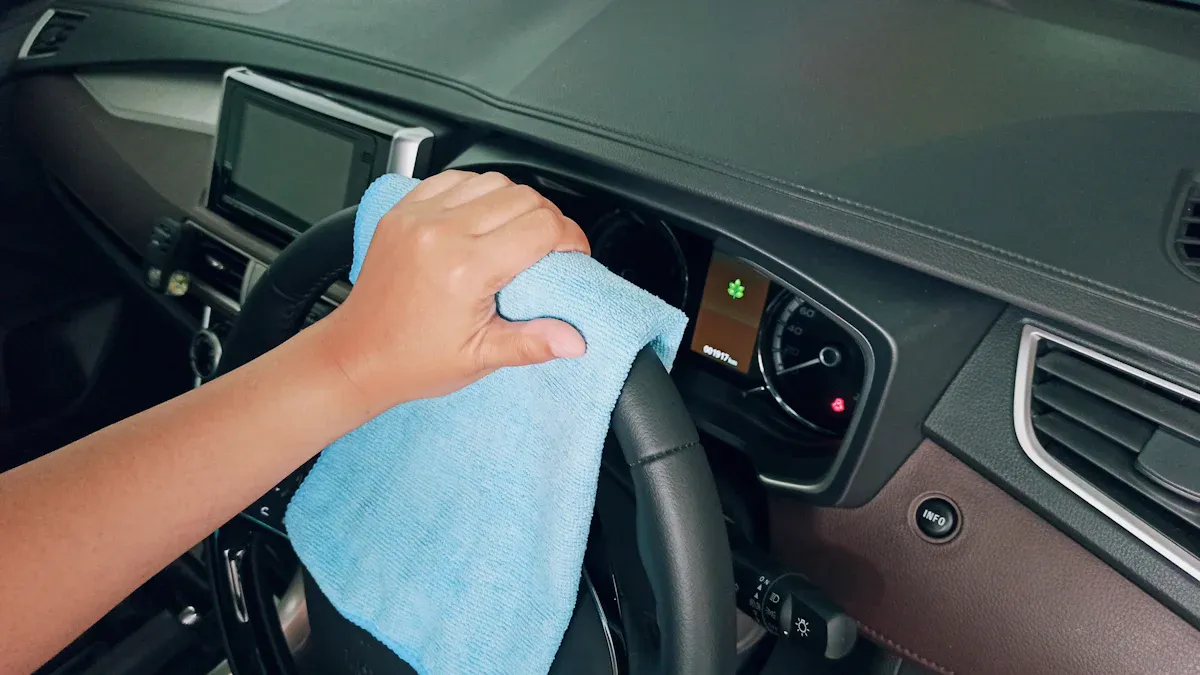
Vacuum and Steam Clean
Start with a good vacuum. You want to pick up ash, dust, and any small bits stuck in your seats and carpets. Use a HEPA filter vacuum if you have one. Go over every inch—under the seats, between cushions, and in the trunk. Sprinkle baking soda on the upholstery and carpets. Let it sit for at least 30 minutes. Baking soda helps absorb the cigarette smell. After that, vacuum it up.
Steam cleaning works wonders for deep odors. If you have a steam cleaner, use it on seats, carpets, and even floor mats. Steam lifts out tar, nicotine, and ash that regular cleaning can miss. This step is important because thirdhand smoke particles can get deep into fabrics and foam. Deep cleaning removes these hidden particles and helps protect your health.
Tip: Thirdhand smoke can stick around for a long time. It can even cause DNA damage and increase the risk of disease. You want to get rid of as much as possible.
Wipe All Surfaces
Grab a microfiber towel and a mild detergent or enzyme-based cleaner. Wipe down dashboards, door panels, steering wheel, cup holders, and any hard surfaces. Smoke residue can hide on plastic, vinyl, and leather. Toxic chemicals from cigarette smoke can stay on these surfaces long after smoking stops. Cleaning every surface helps remove these harmful leftovers.
Clean Windows and Mirrors
Don’t forget the glass! Use an ammonia-free glass cleaner and a clean microfiber cloth. Follow these steps:
Spray the cleaner on the cloth, not directly on the glass.
Wipe all windows, mirrors, and screens.
Remove fingerprints, streaks, and dust for a clearer view.
Cleaning the glass does more than make your car look good. It helps remove sticky smoke residue that can hold onto odors. Even after a smoking ban, cars can still show contamination from thirdhand smoke. No amount of cleaning can remove every trace, but these steps make a big difference.
Treat Fabrics & Air System
Shampoo or Steam Seats and Carpets
You want to tackle the source of the odor deep in your seats and carpets. Shampooing can help, but steam cleaning works even better. Steam cleaning kills bacteria and mold that cause bad smells. Shampooing might only mask the odor if you don’t extract it well. Take a look at how these methods compare:
Method |
Effectiveness in Odor Removal |
|---|---|
Steam Cleaning |
Neutralizes odors by killing bacteria and mold at the source |
Shampooing |
Masks odors temporarily with fragrance, but doesn’t always eliminate the cause |
If you don’t own a steam cleaner, you can rent one or use vinegar-soaked towels to wipe down fabric. Vinegar helps break down stubborn residue. For tough cases, some people use ozone machines. These machines neutralize odors at the molecular level, giving you a fresh start.
Change Cabin Air Filter
Your cabin air filter traps smoke particles and keeps air clean. If you skip this step, the smell can come back every time you run the AC. Experts recommend replacing your cabin air filter every 12,000–15,000 miles, or at least once a year. Some say every 30,000 miles is enough, but if you smoke or drive in dusty areas, change it more often.
Replace the filter regularly to prevent odor buildup.
Clean the vents with a vacuum or brush to remove trapped particles.
Tip: A new filter helps your air system stay fresh and keeps cigarette smell from lingering.
Spray Odor Neutralizer in Air Intake
You can use odor neutralizers to clean the air system. Spray an enzymatic cleaner into the air intake. These cleaners break down bacteria and remove smells at the source. For mild odors, auto odor bombs or foggers work well. They release a fine mist that reaches vents and fabrics. If you want a professional touch, ozone generators and air purifiers break down odor-causing molecules and keep your car smelling fresh.
Use enzymatic cleaners for deep cleaning.
Try odor bombs or foggers for quick results.
Consider ozone generators for stubborn odors.
Combining these methods gives you the best chance to remove cigarette smell for good. Regular cleaning and filter changes help keep your car fresh.
Odor Neutralizers for Cigarette Smell

Baking Soda Methods
You can use baking soda to tackle stubborn cigarette smell in your car. Baking soda works as a natural odor absorber. Here’s how you do it:
Sprinkle baking soda on seats, carpets, and floor mats.
Let it sit for at least an hour. If the smell is strong, leave it overnight.
Vacuum up the baking soda to remove both the powder and the trapped odors.
Baking soda doesn’t just mask the smell. It actually neutralizes the odor molecules. You don’t need fancy products or chemicals. This method is safe for kids and pets, and you won’t add any pollution to your car’s air.
Tip: Repeat this process every few weeks if you notice the smell coming back.
Vinegar Solutions
Vinegar is another easy way to fight cigarette smell. It acts as a [natural deodorizer](source: Vinegar is a natural deodorizer). You should dilute vinegar with water before using it. The strong scent can be overwhelming, so always test it on a hidden spot first.
Mix equal parts white vinegar and water in a spray bottle.
Spray lightly on upholstery, carpets, and headliners.
Wipe with a clean towel and let the area dry.
Vinegar breaks down odor molecules without adding harsh chemicals. You avoid the risk of indoor air pollution from chemical sprays. If you want a quick fix, place a bowl of vinegar in your car overnight to soak up lingering smells.
Ozone Machine Treatment
Ozone machines can help remove cigarette smell, but you need to use them carefully. Ozone reacts with smoke particles and breaks down nicotine and other chemicals. Studies show that ozone can remove harmful substances like polycyclic aromatic hydrocarbons. However, ozone generators have limits. They don’t filter the air as well as carbon systems.
Never run an ozone machine while you’re inside the car.
Ventilate your car fully after treatment.
Avoid frequent use, since ozone can damage rubber seals, leather, and dashboards.
Misusing ozone machines can leave dangerous levels of ozone in your car. You might experience coughing or chest pain if you breathe it in. Always follow safety instructions and keep treatments short.
Note: Chemical odor neutralizers often contain volatile organic compounds (VOCs). These can pollute your car’s air and cause health problems over time. Natural options like baking soda and vinegar are safer for you and your passengers.
Keep Car Fresh
Prevent Future Odors
You want your car to stay fresh after all your hard work. The best way to keep cigarette smell from coming back is to stop smoking in your car. Set a no-smoking rule for yourself and your passengers. If you need extra help, try these strategies:
Place air purifiers or charcoal bags inside your car. These absorb odors all year.
Clean air vents and HVAC ducts often. Smoke particles can hide there and return later.
Replace your cabin air filter every three to six months. This keeps the air clean.
Wipe down the interior every month. Regular cleaning stops smoke residue from building up.
Schedule deep cleaning with a professional detailer each season. This removes moisture and dirt that can reactivate old smells.
Tip: Charcoal bags work quietly in the background. You just leave them under a seat or in the trunk.
Regular Maintenance Tips
You don’t need fancy tools to keep your car smelling good. Simple habits make a big difference:
Clean the interior often to prevent smoke buildup.
Deep clean carpets and seats with a steam cleaner or upholstery cleaner.
Wipe all surfaces with a vinegar and water solution or a car interior cleaner.
Use odor neutralizers like baking soda or activated charcoal.
Open the windows sometimes to let fresh air in.
A quick wipe-down every week keeps your car looking and smelling fresh. You can set reminders on your phone so you never forget.
Recommended Air Fresheners
Air fresheners help mask or eliminate lingering odors. Many drivers love these options:
Air Freshener |
Features |
|---|---|
Refillable, eco-friendly, uses essential oils |
|
RoyAroma Car Aromatherapy Diffuser |
Stainless steel, 12 felt pads, customizable |
InnoGear USB Essential Oil Diffuser |
USB powered, quiet misting, fights musty smells |
Organic Aromas Mobile Mini 2.0 |
Waterless, portable, high-end dispersal |
Air Jungles Vent Clip Diffuser |
Compact, pre-filled cartridges, long-lasting |
Moso Natural Air Purifying Bag |
Bamboo charcoal, chemical-free, rechargeable |
PURGGO Car Air Eco-Purifier |
Hemp & bamboo charcoal, lasts over 365 days |
You can pick one that fits your style and needs. Many people prefer charcoal bags because they last a long time and don’t use chemicals. Essential oil diffusers add a pleasant scent and help you relax while driving.
Note: If you keep up with these habits, you won’t have to worry about cigarette smell coming back.
You can get rid of cigarette smell in your car if you stick to the right steps. Start by letting your car breathe. Clean every surface, vacuum, and use odor eliminators like baking soda or vinegar. Replace your cabin air filter and steam clean the interior. Try an ozone generator for stubborn odors and disinfect the vents. Keep up with these habits, and your car will stay fresh. Got your own tips or questions? Drop them in the comments below!
FAQ
How long does it take to get rid of cigarette smell in my car?
You can notice a big difference after a deep clean. Most people need a few hours for the first cleaning. Tough odors may need several treatments over a week.
Can I use household products to remove smoke smell?
Yes! Baking soda, white vinegar, and activated charcoal work well. You don’t need expensive cleaners. These items absorb and neutralize odors safely.
Will air fresheners alone remove cigarette smell?
Air fresheners only mask the odor. You need to clean surfaces and treat fabrics to get rid of the smell for good. Use air fresheners after deep cleaning.
Is it safe to use an ozone machine in my car?
Ozone machines remove odors, but you should never stay inside the car during treatment. Always air out your car after using ozone. Follow safety instructions for best results.


